
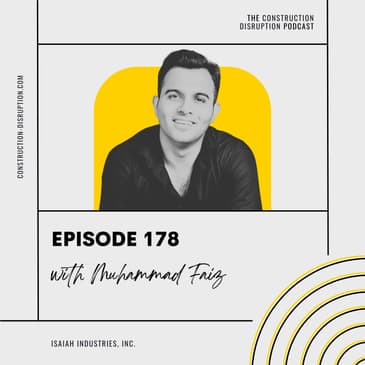
Todd Miller of Isaiah Industries and co-host Ethan Young welcome Muhammad Faiz of Rise Roofers and host of the Roofing Millionaires podcast to discuss how he entered the roofing industry from Pakistan, his shift from ads and lead generation to helping roofers build emotionally resonant brands, and why many contractors lack marketing knowledge and a clear definition of growth.
Faiz explains how purpose can serve as a decision filter amid overwhelming tech and platform choices, and how positioning helps contractors avoid competing solely on the lowest price. He shares why he started Roofing Millionaires as a non-promotional platform for veteran insights, highlights his favorite episodes, and describes client outcomes centered on clarity, fulfillment, and premium perception. In rapid-fire questions, he discusses a childhood English lesson, favorite foods, his view that roofing will return to relationship basics, and how to connect with him.
Timestamps
00:00 Welcome and Co-Host Intro
00:41 Meet Muhammad Faiz
02:16 Why Roofing Marketing
04:19 From Pakistan to Freelance
05:46 Rise Roofers Branding Focus
09:27 Purpose Driven Growth
11:09 Tech Noise and Clarity
15:39 Positioning Beyond Price
17:34 Why Start the Podcast
24:34 Best Episodes to Start
26:50 Client Transformations
32:52 Faiz Personal Purpose
35:45 How to Work Together
38:03 Define Your Growth
40:52 Rapid Fire Questions
46:39 Connect and Closing
Connect with Muhammad Online
Facebook: https://www.facebook.com/muhammadfaiz99
For more Construction Disruption, listen on Apple Podcasts or YouTube
Connect with us on Facebook, Instagram, or LinkedIn
This episode was produced by Isaiah Industries, Inc.
Construction Disruption was recently featured in this 15 Best Podcasts for Contractors list!
This podcast uses the following third-party services for analysis:
Podtrac - https://analytics.podtrac.com/privacy-policy-gdrp
I'm Todd Miller of Isaiah Industries, manufacturer of specialty metal roofing.
Speaker:Welcome to Construction Disruption, the show that explores what's working,
Speaker:what's new, and what's next in the construction and remodeling worlds.
Speaker:I'm excited about today's show, but first, let me welcome our
Speaker:co-host today, Ethan Young.
Speaker:How you doing, Ethan?
Speaker:I've been doing well.
Speaker:It's been a while since, while since I'm here, but glad to be back
Speaker:Glad to, uh, have you here.
Speaker:You're right, we took a little bit of a hiatus there, and, uh, now we're working
Speaker:to line up some great sh- uh, great guests for the next several episodes.
Speaker:So, uh, looking forward to kicking that off today.
Speaker:So, let's get going.
Speaker:So today on Construction Disruption, we're excited to welcome
Speaker:Muhammad Faiz of Rise Roofers.
Speaker:Muhammad is an entrepreneur, roofing business leader, and host of the
Speaker:Roofing Millionaires podcast.
Speaker:Muhammad has built a strong reputation in the roofing industry for, for helping
Speaker:contractors think bigger, grow smarter, and build businesses that create
Speaker:value, freedom, and long-term success.
Speaker:Through the Roofing Millionaires podcast, he's become known for
Speaker:candid conversations around sales, leadership, entrepreneurship, marketing,
Speaker:mindset, and what it really takes to scale a contracting business in
Speaker:today's rapidly changing environment.
Speaker:Muhammad brings a unique combination of ambition, energy, and real-world
Speaker:experience to our industry, and we're excited to dive into his thoughts
Speaker:on disruption, growth, opportunity, and where roofing is headed next.
Speaker:Muhammad, welcome to Construction Disruption.
Speaker:Thank you.
Speaker:Thank you, Todd, and thank you Ethan for having me on the show.
Speaker:And I'm glad to have this interview because this is the first time I am
Speaker:sitting down as a guest in an interview because I have hosted so many interviews
Speaker:and I'm kind of confused and anxious.
Speaker:But, uh, I think so that we'll able to pull this off
Speaker:Well, you have a great podcast, and so you're, you're a natural at doing
Speaker:these types of things, and, uh, that was what caused us to reach out to
Speaker:you and say, "Hey, it'd be great for us to have a conversation." So,
Speaker:uh, we're looking forward to that.
Speaker:So I'm curious, I mean, you know, you're doing a lot of work helping roofers with
Speaker:marketing and other things, and branding, and really establishing themselves.
Speaker:Is there anything in particular that kind of drew you to the roofing industry?
Speaker:Thank you.
Speaker:Thank you for asking that question, and this is the question that I feel most
Speaker:people ask me in the industry as well.
Speaker:And I don't have a fancy answer for this because I'm just a normal person
Speaker:who is living in a third world country.
Speaker:And just like everyone in here, I had to start my career from freelancing, and it
Speaker:is just natural that when I started my career, uh, I, I am an electrical engineer
Speaker:by the way, and this was quite unusual for me to have a freelancing career.
Speaker:And when I started this, I just started working with home
Speaker:service businesses randomly, and then I just never looked back.
Speaker:Like, previously, it was the entire construction industry, but then when
Speaker:I decided to niche down, I l- I, I figured out that most of my clientele
Speaker:is in the roofing industry, and this is something that I have knowledge about
Speaker:as well because I had been working with roofing contractors like since 2017.
Speaker:So this is how I specialized kind of, kind of specialized in the roofing industry.
Speaker:And it's not a fancy answer, but it just all happened by nature that, uh, I just
Speaker:started as a freelancer, then I started working with construction business owners,
Speaker:and then I just specialized that I need to niche down and I need to work with
Speaker:people who I have the most knowledge about and which was the roofing industry
Speaker:You know, I think that makes every bit of sense, and it's the perfect answer
Speaker:because, um, everyone, I think these days, especially when it comes to
Speaker:marketing and lead generation and scaling their business, is looking for folks
Speaker:who really understand their industry well that can actually help them,
Speaker:rather than just a generalist that's trying to help anyone and everyone.
Speaker:Um, so you mentioned being from a, uh, third world country.
Speaker:Uh, just to clarify for our audience, you're in Pakistan.
Speaker:Is that correct?
Speaker:Yes, sir, I'm in Pakistan
Speaker:Okay, and have you lived there your whole life, I assume?
Speaker:Uh, yes, I was born in Pakistan in, back in 2001, and, uh, I'm just,
Speaker:like, 26 years old, 25 and turning 26.
Speaker:Um, and, uh, I, I am a electrical engineer graduate, but, uh, having
Speaker:an engineering background and then being, becoming a marketer,
Speaker:that is an unusual kind of thing.
Speaker:But, uh, the way I did it is ba- bec- back in my college days, I was
Speaker:working as a freelancer because, uh, in here, uh, people, even if
Speaker:they make, like, a 50 or $100, they think that it is such a great amount.
Speaker:But, uh, in the US, you, you obviously know that there is
Speaker:currency conversion and everything.
Speaker:So I started earning in dollars, and then I just never looked back.
Speaker:I went from $100 to 1,000 to 5,000 and to 10 grand.
Speaker:And, uh, I'm living in Pakistan.
Speaker:I do have plans to come to the US and, uh, have some exposure.
Speaker:But right now, to answer your questions, I was born in Pakistan,
Speaker:and I'm living here since then
Speaker:Well, that's fantastic.
Speaker:You probably are the farthest away… Well, we've had a couple of guests
Speaker:from Australia, um, so I guess we have had a few other distant
Speaker:guests, but it's a real pleasure and honor to have you with us today.
Speaker:So, um, kind of give us an overview.
Speaker:With Rise Roofers, in what ways, uh, are you able to help roofing
Speaker:contractors grow their businesses?
Speaker:So right now, what I am doing with Rise Roofers, if I begin with the history
Speaker:of this, I, I, I just started out.
Speaker:I, I, I won't say that I had a, a so-called system or a solution
Speaker:that was supposed to revol- revolutionize the roofing industry.
Speaker:I just started out as a normal advertising guy and a copywriting guy.
Speaker:So I was doing ads, I was doing websites, then I had people in my team.
Speaker:I, I developed, developed and scaled my business.
Speaker:But, uh, as I, I, I, I started to get more knowhow of the roofing industry, I
Speaker:realized that the problems that roofing industry has regarding marketing are
Speaker:not related to advertising, are not related to, like, how Facebook ads
Speaker:should work, how Google ads should work.
Speaker:It is that roofing contractors don't have the knowledge about marketing
Speaker:their businesses in the first place.
Speaker:So, uh, when … Due to this lack of knowledge, what happens is that
Speaker:whenever a normal lead generation guy comes to the roofing contractors with
Speaker:a fancy-sounding solution, the roofing contractor or the roofing business
Speaker:owner gets attracted to that solution.
Speaker:So over the years, I realized that the problem is not with the concept
Speaker:of marketing or, uh, with advertising.
Speaker:The problem is that roofing business owners don't know how they
Speaker:have to market their businesses.
Speaker:What they do is that they learn from others without knowing that
Speaker:w- this is my business, and I have to figure out how my customers
Speaker:want to connect with this business.
Speaker:So this is what I am doing with Rise Roofers right now, is helping roofing
Speaker:contractors create brands, uh, that connect emotionally with their customers,
Speaker:and the brands that choose that which is the right channel that we should use as
Speaker:a brand to connect with our customers, whether it is Facebook, Google, SEO,
Speaker:local marketing, billboards, or whatever.
Speaker:But if you are a brand, then you have the chance and the opportunity
Speaker:to pick your platforms and use your brand as a decision filter for every
Speaker:marketing decision that you do.
Speaker:So with Rise Roofers right now, uh, we started with the advertising and marketing
Speaker:and everything, but right now we have just niched down to branding alone, and
Speaker:we are helping roofers building brands.
Speaker:And not surface-level brands, like just with the logos or the colors or the texts.
Speaker:We are actually helping them become brands that connect emotionally with
Speaker:their people only, just as you said that you have to work with something,
Speaker:someone specific, not with everyone.
Speaker:So we are trying to help roofers do that as well.
Speaker:But, uh, the tool that we are using is brand.
Speaker:You know, I think you really have hit the nail on the head in that most
Speaker:roofing contractors here in the States end up being a roofing contractor
Speaker:because they started working for another roofing contractor, and eventually
Speaker:they grew and got a nicer truck and got some capital established and
Speaker:went ahead and started a business.
Speaker:So, uh, they enter it without really knowing anything about marketing
Speaker:or branding or anything else.
Speaker:So, um, it sounds like, I mean, a lot of what you do is you can also
Speaker:help that roofing contractor kind of transition from being someone who has
Speaker:to be on the roof helping his crews to becoming more someone who is focused
Speaker:on leading and scaling their business.
Speaker:Is that correct?
Speaker:Yes, sir, it is correct.
Speaker:And, uh, I have come to a special kind of a discovery tour that,
Speaker:uh, most contractors, they don't have a definition of growth.
Speaker:And just as you said, that these contractors become business owners because
Speaker:they saw their, their boss as a business owner, and they got inspired by the trucks
Speaker:that he has or the money that he has or the kind of lifestyle that he lives.
Speaker:But they don't know whether I want to be a roofing business owner or not,
Speaker:or what is my definition of growth.
Speaker:So as a result, what happens is that when they start their company, even if their
Speaker:marketing works or even if their marketing does not work, what happens is that they
Speaker:chase the wrong definition of growth.
Speaker:And, uh, to answer your question, what I am helping them with is not something that
Speaker:I have introduced or I have developed.
Speaker:This is something that I discovered, that when you operate from your
Speaker:purpose, you create a brand.
Speaker:And when you have a purpose, then you can decide that whether I have to be
Speaker:the person who shows up at roofs or who does everything by hand or who
Speaker:is looking at the operations of his company, or I have to be the guy who
Speaker:just sits at the office desk and manages everything and motivates the team.
Speaker:So if you know your definition of growth, you can decide that which side you have
Speaker:to choose and if-- how do you know that?
Speaker:By knowing your purpose.
Speaker:And this is something that I think so, uh, is not supposed to be
Speaker:taught by me or by you or by anyone.
Speaker:This is something that happens when a roofing contractor sits
Speaker:down and discovers what kind of business he actually wants to create
Speaker:That is very fascinating.
Speaker:And so I assume you help them through that process.
Speaker:Well, I'm curious, you know, as you work in the roofing industry and, you
Speaker:know, help contractors kind of discover their purpose and figure out how they
Speaker:create a brand based upon that, are there any changes that you're seeing
Speaker:going on in roofing or lead generation or marketing, uh, that you think are
Speaker:presenting some particular challenges to contractors that they need to be
Speaker:aware of and on top of going forward?
Speaker:Yes.
Speaker:Uh, the number one challenge that I see these days is
Speaker:everyone is obsessed with tech.
Speaker:Like, uh… And the other factor here is that everyone is obsessed with tech, but
Speaker:there are so much, so many platforms that are being introduced every single day.
Speaker:Every single day you wake up and you see on the news or on your Facebook
Speaker:feed that there is another platform, an AI platform or anything else, that
Speaker:has just been launched to help you with this specific part of your business.
Speaker:Now, there is so much rush of information in front of you that you
Speaker:are confused whether I have to take this decision or not, and this confusion
Speaker:never lets you make any decision.
Speaker:So this is the number one challenge that I see, uh, that I see in, in the roofing
Speaker:industry, is that people don't know what is the exact choice they should make.
Speaker:And how brand helps you with that, I don't think so.
Speaker:Like, let, let's just break down brand first.
Speaker:So brand is composed of, like to me, there are many definitions of a brand,
Speaker:but what I have discovered is that a, a brand is just something that helps you,
Speaker:that helps you connect your business to your customers on an emotional level.
Speaker:Yes, you are doing transactions, but a brand is something that helps
Speaker:you connect your business to your customers on an emotional level.
Speaker:So there are many different parts of a brand, and, uh,
Speaker:we will get to that later on.
Speaker:But right now, the first part of brand is purpose.
Speaker:So when you have your purpose clear, you can easily solve this number
Speaker:one challenge, which is confusion.
Speaker:Because when you have your purpose clear, just as you said that they,
Speaker:they, they see that marketing is just trucks and well-designed trucks, but
Speaker:when you have your purpose clear, you, you can think that, "Okay, my purpose
Speaker:is to save people from insurance fraud." Let's just say that this is the
Speaker:something that I, I, I want to work on, and this is something that inspires me.
Speaker:So now my purpose becomes my decision filter, that when I wake up and
Speaker:when I have that rush of information in front of me, that I ha- I, I'm
Speaker:seeing in news that Todd has just launched another AI platform.
Speaker:Mohammed has launched another software that helps with lead generation.
Speaker:Ethan has launched another platform that helps them with qu-
Speaker:uh, with invoices or anything.
Speaker:I can use my purpose as my decision filter that I can ask myself, "Mohammed,
Speaker:I want to save people from insurance fraud, so do I need to run Google
Speaker:Ads, uh, or my customers are actually looking for that on Google? Or is, is
Speaker:it a better use of my resources that I arrange, uh, an event locally and
Speaker:guide them about insurance frauds?"
Speaker:So now the purpose is becoming the decision filter for everything.
Speaker:Now- You have all this information and you have all these tools, but now
Speaker:you are making decisions from a place of confidence instead of a place of
Speaker:scarcity or a, a fear of missing out.
Speaker:So the number one challenge that I see is that there is so much information
Speaker:and, uh, but by having this much information, what roofing contractors
Speaker:do is that they don't make any decision.
Speaker:But the solution to this is that, uh, if you have your purpose clear and if you
Speaker:know how you want to operate, you can use that as a decision filter and focus on
Speaker:the signals only and ignore the noise.
Speaker:Uh, we see all these big brands all around us.
Speaker:Like, uh, let me give you an example here, which might not be related to the roofing
Speaker:industry, but I hope so since this is a, a big brand and everyone uses that.
Speaker:When you are interacting with Apple, like, do you expect Apple to make a phone, uh,
Speaker:that is worth like maybe $100 or $200?
Speaker:You don't.
Speaker:Like, when you think of an iPhone, the normal perception of a human
Speaker:is that, okay, this phone will be starting from maybe 700 bucks
Speaker:or 900 bucks or 1,000 bucks.
Speaker:That is a general perception.
Speaker:Now, roofing contractors whine about this all the time that, "I lose to the
Speaker:cheapest bid," or even if it is a retail job or a- an insurance job, "I just
Speaker:don't, um, have the chance against the cheapest bid." But the problem here is not
Speaker:the volume of leads that you get or the volume of door knockers that you send or
Speaker:the amount of yard signs that you throw.
Speaker:It is that you never worked on positioning.
Speaker:And I, I, I kept it for later part of this conversation, but you just
Speaker:touched it perfectly right here.
Speaker:Uh, that brings me to the second part of the brand.
Speaker:Like I, I mentioned purpose.
Speaker:The second thing is positioning.
Speaker:Like once you have your purpose clear, now you can think of how I
Speaker:want to position my business as well.
Speaker:And the reason that I can't give you many examples from the roofing industry is that
Speaker:eventually there are not many people who are focusing on this.
Speaker:And even if I am telling you that this is the solution that you have to focus
Speaker:upon, at the end of the day, when a roofing contractor works, um, maybe or
Speaker:sits down at his table and he sees that, okay, uh, this is something that will
Speaker:make me more money or this is something that sounds good logically on paper,
Speaker:he's going to invest into that solution even though that, that solution is not
Speaker:going to bring him any results, instead of sitting down and thinking, "How can
Speaker:I actually make my business a brand and position it so well so the person can
Speaker:actually pay the price that I want to charge or look at the way at least that
Speaker:I want my business to be looked at?"
Speaker:Yeah, I, I, I really liked what you were saying though, is terms of, you
Speaker:know, letting your purpose drive your messaging and also drive your vehicle
Speaker:of how you're gonna go out and get that message out, uh, makes a lot of sense.
Speaker:So I'm kinda curious, is this the type of thing you talk a lot about on your,
Speaker:uh, Roofing Millionaires podcast?
Speaker:Um, what types of things are you trying to accomplish through the podcast?
Speaker:That is like, uh, that is a really great question, Todd, and, uh,
Speaker:this brings me, uh, like if you allow me some time, I would like to
Speaker:share why I started this podcast.
Speaker:So by, by the time I, I, I share that, uh, you will have a better context
Speaker:about what I am doing with the podcast and how it is different from what I am
Speaker:doing at the marketing agency level.
Speaker:So when back in like 2017, I started working with roofers, and, uh, I was
Speaker:looking around like, uh, people in the US, you guys have people around you who
Speaker:are making, uh, maybe millions per y- per year or like hundreds of grants per month.
Speaker:But, uh, here, like you guys, if you have worked with the people in the Pakistan
Speaker:and around, you see that guys come here to get the work done for the cheapest price.
Speaker:They don't come here for value.
Speaker:Like they think of that, okay, if I am working with someone, someone from
Speaker:Pakistan or India or Bangladesh or whatever, I will get the cheapest price.
Speaker:Like if, uh, something has to be done for like $5,000, from a third world country,
Speaker:I would get it done for like $500.
Speaker:So I was, I was being look-- growing and looking at all these
Speaker:people, and I, I did not like that.
Speaker:I wanted to, to, to, to have value and worth, and that is
Speaker:something that I started doing.
Speaker:Like I charging prices, I, I, I worked on myself, I worked on how
Speaker:I should present myself, and then I started becoming known to my clients.
Speaker:And I am not someone who works with like 100 or 200 companies at a time.
Speaker:I only work with like maybe eight to 10 people in one year, that's all.
Speaker:So but the way I work is that I have conversations with my clients who
Speaker:are primarily roofing contractors.
Speaker:So back in 2021 or 2020, in the COVID time, everyone had more time because we
Speaker:were ha- we were at home during lockdown.
Speaker:So I used to have conversations with roofing contractors, and, uh, everyone
Speaker:was empty inside as a business owner.
Speaker:Like even if you are making millions of dollars in revenue, but there were
Speaker:some things that maybe we can sit down and talk about them in another meeting.
Speaker:But, uh- they were empty and unfulfilled.
Speaker:And, uh, then I started wondering because I was part of the industry,
Speaker:I started looking at, uh, the people who these roofing contractors who are
Speaker:just starting out, they look up to.
Speaker:Like, if I am a roofing contractor in Georgia and I'm starting out, uh, I will
Speaker:be tempted to follow the contractor who is making millions in, in my, my city, maybe
Speaker:Atlanta, and I will be following him.
Speaker:And when I see that guy on a podcast, the only conversation he was having is,
Speaker:uh, maybe promotion of his company or promotion of the software that he is about
Speaker:to make, or, uh, that, that person might be sitting down on a podcast with another
Speaker:marketing agency or another service provider to, to the roofing industry,
Speaker:and both of them will be talking about how we can, uh, sell this solution to the
Speaker:roofing contractor who is either starting out or who is just doing millions.
Speaker:So I st- I started thinking that I, I was having these conversations with my
Speaker:clients that if you ha- you guys have all these problems, then why don't you
Speaker:go to your conferences and all the, uh, roofing expos and all the podcasts?
Speaker:Why don't you ask questions there?
Speaker:And they tell me that, uh These things are not for genuine connection.
Speaker:These things are not to guide us.
Speaker:These things are just for promotion.
Speaker:Like, I, I, I'm not blaming all the conferences, but most of
Speaker:them, they are just for promotion.
Speaker:Most of the podcasts, they are for promotion as well mostly.
Speaker:And, uh, I started looking at all these things.
Speaker:Now, I was a marketing agency owner myself, so what I saw is that there
Speaker:is a huge gap in the roofing industry about the knowledge that someone who
Speaker:is starting out in the industry should have, and these people who have 10, 20,
Speaker:30 years of experience, they are not sharing that, or maybe they don't have
Speaker:a chance to share that because they are never given a platform like that.
Speaker:So I saw a gap, and I thought of creating a podcast where we don't promote anyone
Speaker:and, uh, we don't sell you anything.
Speaker:So this is the motto of my podcast if you, if you have watched any episode.
Speaker:This is something that I say in every podcast.
Speaker:So I, I, I decided I had this, uh, discussion with all the clients that
Speaker:I was working with, and the first thing that I did is that I made the
Speaker:decision that this will be the po- roofing podcast where I will never sell
Speaker:anything and I will never promote anyone.
Speaker:The second thing that I decided to do is that I will never have any of my
Speaker:customers during, like, the, the launch of this podcast because that will
Speaker:make me so-- Because if someone who is my guest and they are my customer at
Speaker:the same time, the conversation will eventually shift to how I am helping
Speaker:them, or it will be my kind of promotion.
Speaker:It won't be something that 10 years down the road a roofing contractor
Speaker:or, uh, someone who is like 20 or 25 years old and they want to start out
Speaker:in the roofing industry, they can just listen to that conversation and
Speaker:get value from that conversation.
Speaker:So the second step I took is that I start-- I stopped And I decided that
Speaker:I will never have any of my clients during the launch of the podcast.
Speaker:So these are the two, two things, thing, uh, two big things that I did.
Speaker:And then I just started reaching out to the contractors about this
Speaker:podcast and about this new kind of conversation that I want to have.
Speaker:Then I just, uh, had a few, uh, I don't know, like if it happened by
Speaker:coincident, but I managed to have some of the really big names on my
Speaker:podcast in the roofing industry.
Speaker:And the conversations that I had, they were not promotional.
Speaker:They were like a human-to-human, uh, genuine conversation that
Speaker:we have on a human level, and this was my core of the podcast.
Speaker:So this is how I ended up creating The Roofing Millionaires.
Speaker:And in all these four or five minutes, I never mentioned that this is somewhere
Speaker:related to Rise Roofers, because I always want to keep it as a separate
Speaker:entity that just focuses on guiding roofers and providing a platform where
Speaker:roofing contractors can come and share their knowledge and their experience
Speaker:with other roofing contractors, so they can learn from the experiences of
Speaker:these vet- these veteran contractors.
Speaker:And, uh, this is The Roofing Millionaires, and Rise Roofers is something
Speaker:that helps roofers with branding.
Speaker:So this is the difference, and this is the story behind this as well
Speaker:Very interesting.
Speaker:Can, can you recall, um, a particular episode of The Roofing Millionaires
Speaker:that really stands out in your mind as, you know, hey, that's a great episode?
Speaker:If someone w- just wants to kind of get introduced to the podcast,
Speaker:that that would be a great episode for them to listen to first
Speaker:That is, uh, a tough question, Todd, because right now I don't even
Speaker:remember what I had for dinners like
Speaker:I understand.
Speaker:I understand
Speaker:so I will give you like, uh, uh, may- not one, maybe two or three answers,
Speaker:and if anyone who had been on my podcast and I skip their name, I apologize in
Speaker:advance because I, I, it's like I, I, I just can't think of something right now.
Speaker:But the ep- In season one, I had a conversation with John Chan from
Speaker:the Durable Slate Company in Georgia that was a top-level conversation.
Speaker:This, this was absolutely one of my favorite conversation.
Speaker:The second conversation that I had was, uh, with Dominic Fraser
Speaker:from Fraser Roofing LLC, and that of course was in Georgia as well.
Speaker:So that is the second conversation.
Speaker:These are the two conversations that I can recall from season one, and no
Speaker:offense to all the other episodes, they are full of value as well.
Speaker:Uh, and in season two, I just had a conversation two weeks back, or, or
Speaker:maybe last week, with Jim Johnson, uh, from Contractor Coach Pro.
Speaker:That was hands down, uh, one of the best conversations that I had on the podcast.
Speaker:And since Jim has, has so much exposure and experience in the industry because he
Speaker:coaches so many contractors, the things he shared, if you are in the first five
Speaker:years of your, your roofing business, I would recommend you or I would highly
Speaker:suggest you to watch or listen to that conversation that Jim Johnson and I
Speaker:had, because that is something that, uh, will be really valuable to you.
Speaker:So it's not one, it's three.
Speaker:Number one is John Chan, uh, in season one.
Speaker:Number two is Dominic Fraser in season one, and number three is,
Speaker:uh, Jim Johnson in season two
Speaker:I'm sure those are all great episodes.
Speaker:I'm familiar with all three of those individuals.
Speaker:Uh, know Jim Johnson, probably the best of the three, but, uh, I have no doubt
Speaker:those are all, uh, fantastic episodes.
Speaker:So I'm curious too, um, are there any success stories you can relate to us
Speaker:back to Rise Roofers and your clients?
Speaker:Any success stories you can relate to us where you know that, you know,
Speaker:you've seen some real positive impact after someone started working with you?
Speaker:Yes, sir. Uh, I won't suggest-- Like, I, I won't like to name these
Speaker:contractors specifically, but I will say that there is a roofing company
Speaker:owner in Plano, and there is a roofing company owner in, um, Tampa, Florida,
Speaker:and there is a roofing company owner in Colorado, uh, Conifer, Colorado.
Speaker:So these are the three success stories that I can think of
Speaker:right, uh, on the top of my head.
Speaker:And the reasons I call them success stories is not because I generated or my
Speaker:team generated tons of leads for them.
Speaker:It's not that.
Speaker:The reason I call them success stories is that I started having
Speaker:conversations about how to build a brand with these three guys.
Speaker:And, uh, after this, this, they started discovering their purpose.
Speaker:And, uh, I, I still remember one contractor in Tem-Tampa.
Speaker:He's like twenty million con- dollar contractor, and I won't, won't name
Speaker:him, but I think so you, you, you will probably, uh, know him, and we can
Speaker:have this conversation off the camera.
Speaker:But, uh, he is a really famous contractor in Florida and, uh, he,
Speaker:he and I were having a meeting.
Speaker:And the reason I think so he is my best con- uh, success story is that
Speaker:he told me that after having all these success and all these opportunities
Speaker:and achievements, I go back to bed and I don't feel fulfilled.
Speaker:And, uh, even though he has a coach in life, so my success story wasn't to
Speaker:get him leads because that is something that we were already doing for him.
Speaker:My success story wasn't to improve his conversion rate because he
Speaker:already had a coach to do that.
Speaker:My success story was just to introduce him to a purpose that let him make
Speaker:his brand, and his purpose was to create opportunities for as many
Speaker:people as he can on a local level.
Speaker:And when we figured out this purpose, we started projecting this purpose in
Speaker:every department of the business that he was running and with every problem
Speaker:that he was facing in his business.
Speaker:And three or four months later, he came back to me.
Speaker:Previously, he was quite skeptical because obviously I am a young guy and he is like
Speaker:fifty years old, and I am introducing him to something that is totally
Speaker:abstract and totally new for someone who is qui-quite fond of dealing with
Speaker:numbers and logics and all these things.
Speaker:Three months down the road, he came back to me and he said that, "Now I have so
Speaker:much clarity about the kind of business that I want to create that I never
Speaker:feel confused because my purpose has become my north star." And that is not
Speaker:just with the company owner in Tampa.
Speaker:This is same with the company owner in Plano as well.
Speaker:And the reason I don't want to name them is, is because they sh-share so
Speaker:many personal things with me, and, uh, this is so personal to them that I
Speaker:think so that I would actually name him.
Speaker:He is the owner of Green Roofing & Construction in Plano, and he is actually
Speaker:one of my greatest friends as well that I have had in the roofing industry.
Speaker:And, uh, I won't dwell deep into, uh, what his purpose was and what
Speaker:his transformation was, but, uh, the success story here is that this person
Speaker:has now started making decisions, um, that make him a great company, even
Speaker:if they don't make it a big company.
Speaker:And that is a really big statement.
Speaker:Like, there is a difference between a big company and a great company.
Speaker:And when I work with people, I ask them, and I help them understand or figure
Speaker:out what is their definition of growth.
Speaker:So the transformation that happens is exactly that what I shared in the earlier
Speaker:part of this interview, that you start making decisions with your own purpose
Speaker:and with, with your own North Star.
Speaker:So the transformation happens in, inside before it happens on the outside.
Speaker:And the reason it, it, it sounds abstract is because roofing contractors
Speaker:are used to deal with concrete stuff like logical conclusions on how you
Speaker:can improve your conversion rates.
Speaker:And that sounds good on paper, but that brings you some emptiness as
Speaker:well, because when those things, those calculations that you had on paper,
Speaker:they don't work, you are disappointed.
Speaker:You-- Because all the time you were thinking that all my logical calculations
Speaker:and the stuff that I was thinking is gonna work, but then it doesn't.
Speaker:Something just happens.
Speaker:Life happens, and you, you become disappointed, and you think that whether
Speaker:this is something that I should pursue, or even if you are making money, you
Speaker:are not having a good family life.
Speaker:So the transformation on a brand level is that these people are living and creating
Speaker:a life and a business with purpose.
Speaker:The transformation on the lead generation level is something that,
Speaker:uh, obviously we-- I am a marketing agency owner who is not quite an
Speaker:advocate of online ads himself.
Speaker:So the, the, the transformation on the lead generation side is that,
Speaker:uh, all these three companies, they are not focusing right now
Speaker:on investing heavily into ads.
Speaker:Rather, they are focusing on investing heavily into what actually connects
Speaker:them on an emotional level with their customer, whether it is offline, online.
Speaker:So the transformation might not be, uh, like we took this company from five
Speaker:mil- five million to thirty-five million in two years, but the transformation
Speaker:is that we took this company to…
Speaker:from a place that it was never looked like, um, like it, it never had a
Speaker:perception like Apple, to a place that now, uh, its customer actually look at
Speaker:this company, uh, as a premium provider.
Speaker:That is the transformation that that brands do.
Speaker:That, that is a beautiful story and great, you know, great way that you describe it.
Speaker:I, I have to imagine, you know, as, as you have started and as you have
Speaker:developed your own business, you probably have gone through much of the
Speaker:same process yourself, haven't you?
Speaker:In terms of, "Hey, I need to discover what my real purpose here is, and I
Speaker:need to allow that to drive my brand."
Speaker:So has this also been a process of self-discovery for you?
Speaker:Of course, and I knew that you're gonna ask this, and, uh, this is the first
Speaker:time that I had u- I, I'm having the opportunity to share my purpose as well,
Speaker:because if I am telling something or if I am preaching something that is not
Speaker:concrete or that does not drive me, then of course it makes no sense and I become
Speaker:another, another vendor or another seller who is just selling a cool solution.
Speaker:So the purpose that I came across is that I, I was looking at all
Speaker:these problems, but I was not asking myself the right questions.
Speaker:And there is a, a quote by someone, uh, is that, "The level of your
Speaker:success does not depend on the quality of answers that you, you give. The
Speaker:level of your success depends on the quality of questions that you can ask."
Speaker:So I started having these questions for myself as well, that what is my purpose?
Speaker:What do I want to do in the roofing industry?
Speaker:And I am not someone who, who thinks that, okay, 200 years later,
Speaker:someone would, uh, remember me in the roofing industry as the greatest
Speaker:marketer, or I will leave a legacy.
Speaker:Obviously, we don't know, and I'm not a thinker like that.
Speaker:But what I did realize is that I don't like when businesses
Speaker:don't operate from freedom.
Speaker:I don't like or I, I, I, I, I won't say that I don't like.
Speaker:I, I can't see when, when business owners, they have all the money in this world,
Speaker:they have all the resources in this world, but they don't feel fulfilled.
Speaker:At the same time, I don't like people being cheated.
Speaker:I don't like businesses just operating on a transactional
Speaker:level, and this is something that I see all the time.
Speaker:And the reason that I see this is because most people don't know that
Speaker:they can create a great business just by, by, by focusing on, on
Speaker:emotions and on connections as well instead of transactions.
Speaker:So the purpose that I came across, and this, this has become my decision filter
Speaker:as well, is that I just want businesses, not just specifically roofing business,
Speaker:but all the businesses in this world, I want them to, to connect with their
Speaker:customers on an emotional level, and I want companies to be connection-led
Speaker:instead of transactions-led.
Speaker:And this is why I am helping them to create brands that actually connect
Speaker:emotionally with their customers.
Speaker:And I'm not saying that you have to connect emotionally or you have to
Speaker:get into the mind of everyone, but you have to get into the mind of someone
Speaker:who you think might get value from your service or from your product.
Speaker:Well, tell us a little bit, for someone out there in our audience who is
Speaker:interested in connecting with you and working with Rise Roofers, um, what does
Speaker:that look like for them to get engaged with you and, and to start that process?
Speaker:Okay.
Speaker:Um, right now I'm not taking any new clients for 2026.
Speaker:I wondered
Speaker:you do,
Speaker:if you do have to work with Rise Roofers, then what you have to do is that right now
Speaker:our website is not live, so the best way is to, uh, we are creating a new website.
Speaker:So the best way is to go to our website, www.riseroofers.com, and you, you will
Speaker:have all the, uh, process laid out there and you can just reach out to,
Speaker:to anyone and they will guide you and you will have clarity on that website
Speaker:that, uh, if we are open or not.
Speaker:That is the best way.
Speaker:Otherwise, we are on every social platform as well like Instagram, Facebook, uh,
Speaker:WhatsApp and, uh, LinkedIn or X, so you can reach out to us there as well.
Speaker:And the process is simple.
Speaker:Whenever you reach out to us, um, we don't judge you based on the number of
Speaker:millions that you make or the number of grants or dollars that you make.
Speaker:We judge you, uh, based on the kind of business that you want to, to create.
Speaker:And if we think like f- uh, if we feel that we can actually add
Speaker:value to your business and your purpose, then we work with you and,
Speaker:uh, this is how the process is.
Speaker:It's not like normal marketing agency level, level stuff where you have
Speaker:a strategic meeting, a 45 minutes meeting with the, the owner and he
Speaker:tries to close you or maybe d- try, tries to do a one or two calls close.
Speaker:It's like, uh, you come to us when you are tired from all this marketing bullshit and
Speaker:you actually want to create a brand that stands out and that connects with people
Speaker:Well, I love the way that what you're doing, the way that you're
Speaker:doing it, and the fact that you are operating, uh, with your own really
Speaker:crystal clear clarity of what it is that you do and, and how you do it.
Speaker:Well, been a real pleasure having you with us here today, Mohammed.
Speaker:Is there anything we haven't talked about?
Speaker:We've covered a lot.
Speaker:Is there anything we haven't covered today that you wanted to
Speaker:be sure to share with our audience here on Construction Disruption?
Speaker:Yes, and thank you so much for having me in the first place, and,
Speaker:uh, I apologize if I spoke too much.
Speaker:The one thing that I think, uh, industry needs to know, because I am
Speaker:not someone who has, um, been through a lot in terms of roofing, but I know
Speaker:people who share their stories with me, and, uh, I know people who do maybe
Speaker:15 million, 30 million, 20 million, and, uh, who are just starting out.
Speaker:So I, I, I, I have seen the both sides.
Speaker:I know both sides of the story.
Speaker:So the number one thing that, uh, I think, uh, someone should… I, I think so we
Speaker:have discussed this earlier as well, but the thing that I will leave, uh, roofing
Speaker:contractors with, if you are watching or listening to this conversation,
Speaker:is that define your, your growth.
Speaker:Because the grass is always greener on the other side.
Speaker:You, you look at all these people on stages, and you look at them and
Speaker:they are giving speeches, and you are all pumped up, and you show up
Speaker:at these conferences or listen to this podcast or any other podcast, or
Speaker:have a conversation with someone who is just fond of the hustle culture.
Speaker:But that might not be the definition of growth that you want to have.
Speaker:That might not be the family life that you want to have.
Speaker:Maybe you are just looking at one side of this person as a business owner,
Speaker:and you don't know them personally.
Speaker:You don't know what they think when they go to bed.
Speaker:And people don't share that kind of stories or that kind of stuff online
Speaker:because they fear being vulnerable.
Speaker:If I am doing 20 million, and if you are listening to me, if I'm a roofing
Speaker:contractor, I'm doing 20, 30, or maybe I'm a leader in the industry, I won't
Speaker:show up on a podcast and I would t- I wouldn't talk about my vulnerabilities.
Speaker:But you are listening to me, and you will think that you want a life like me.
Speaker:But I am someone who has listened to this contractor who is doing
Speaker:millions, but he still feels empty.
Speaker:So you have to define what does growth look like to you.
Speaker:How do you want your family?
Speaker:How do you w- you want your employees to behave?
Speaker:How do you want your company to have a culture?
Speaker:How do you want to operate as a business owner?
Speaker:How do you want to operate as a leader?
Speaker:What is the kind of life that you want?
Speaker:So define that, define your growth, because it's you,
Speaker:only you, who can do that.
Speaker:No one else can do it for you.
Speaker:Of course, you can ask yourself the right questions, or someone can help
Speaker:you bring those right questions to you.
Speaker:But at the end of the day, it's your life, it's your journey, and it's your growth.
Speaker:So define that, and by doing that, you will end up having a
Speaker:great business and a great life.
Speaker:This has been fantastic.
Speaker:Um, what a wonderful time together.
Speaker:This episode has, uh, lots of pure gold in it, so thank you very
Speaker:much for, uh, sharing with us.
Speaker:Well, I have to ask you one thing, uh, before we close out, and that is if
Speaker:you're willing to participate in something we call our rapid fire questions.
Speaker:So Mohammed, these are five questions.
Speaker:Some are serious, some are a little silly.
Speaker:All you have to do is give your quick response.
Speaker:Are you up to the challenge of rapid fire?
Speaker:Yes, sir, I would love to
Speaker:Fantastic.
Speaker:Ethan, you wanna ask the first question?
Speaker:Yeah, I can do that.
Speaker:What's a child in memory?
Speaker:My favorite childhood memory is from my dad.
Speaker:Um, like we don't have English as our native language, but, uh, my dad,
Speaker:he is quite an expert in English.
Speaker:And, uh, I was like all these kids, uh, in Pakistan, they, they, they do-
Speaker:they are weak, uh, speaking English.
Speaker:So my dad, he just one day sat down with me, and he was furious at me because
Speaker:he used to think that I will be good at English because it would be in my genes
Speaker:since he's good at English as well.
Speaker:But all of a sudden, he realizes that I'm not someone that he, he can
Speaker:rely on, he can show up to, to anyone that this is my son, and he is good
Speaker:at English, because English here is a sign of, uh, uh, intelligence.
Speaker:So my favorite childhood memory is that, that day when my father, it was like,
Speaker:uh, uh, 20 years or 19 years back, when he sat down with me, and from that day
Speaker:f- uh, straight for like 60 days, him and I, we sat down every single day
Speaker:for two hours, and he used to teach me English, and that is something that is
Speaker:being proven handy in my life right now.
Speaker:So that is my favorite childhood memory.
Speaker:Wow.
Speaker:Well, I would say he did a great job with that.
Speaker:Your English is absolutely superior, so, uh, we're all blessed by that.
Speaker:Um, question number two: What is your favorite meal?
Speaker:I suspect that might be different than meals we eat, eat here in the States.
Speaker:My favorite meal is, uh, biryani, and I don't know if you are familiar to
Speaker:that or not, but you can definitely search on, for that on the internet.
Speaker:It's like rice and, uh, meat, and they are mixed.
Speaker:But I do know that most of the guys in the US, they are familiar with this.
Speaker:So my favorite meal is biryani and, uh, hummus.
Speaker:Hummus is an Arabic dish.
Speaker:It's not a Pakistani dish.
Speaker:So hummus and biryani, these are my favorite things.
Speaker:Wonderful
Speaker:Sounds delicious.
Speaker:Yeah, yeah.
Speaker:Um, question number three.
Speaker:Uh, what, what's a dream vacation that you'd like to take?
Speaker:That's a tough one.
Speaker:I ha- I never thought about this, but it would be somewhere where we don't
Speaker:have a lot of people and, uh, it might be, like, a kind of island or something.
Speaker:But I haven't think, I haven't given it a thought.
Speaker:But it might be, I don't know, like, I haven't given it a thought ever
Speaker:That's quite all right.
Speaker:Well, next question.
Speaker:What is your top prediction for the roofing industry five years from now?
Speaker:What is something you think is going to be, um, a change or
Speaker:development or advancement in roofing over the next five years?
Speaker:I won't say that it is my prediction because I think so that 90% of the
Speaker:predictions, this is my personal take on this, that 90% of predictions that
Speaker:we make, they are purely on the logical factors that we, we, we account.
Speaker:We never account the emotional factors or the psychological factors
Speaker:that are going on in this world, uh, in our, in our predictions.
Speaker:So I would say that in the next five years, what would happen
Speaker:to the roofing industry is that we are going back to the basics.
Speaker:Even though we have AI and all this tech is emerging, but we will go
Speaker:back to that business where-- This is something that I share on my podcast
Speaker:as well, that, uh, you had, like five or six decades back, you had a famous
Speaker:farm in your town, and if someone would ask you, "Todd or Ethan, uh, who has
Speaker:the best milk in, in, in this town?"
Speaker:You would say that, "Oh, it's Uncle Bill. It's Uncle Bill's farm that has the
Speaker:best milk." So in the next five years, what's gonna happen is that even we have
Speaker:all this private equity and everything is going on, but the consumers, the
Speaker:homeowners or the B2B guys, they want that connection with their people.
Speaker:We have all this tech coming in, but people are lost.
Speaker:People are craving that connection.
Speaker:So in the next five years, companies who go back to the basics and make this
Speaker:connection with their people, uh, will be the companies that will perform the best.
Speaker:So in the next five years, we are going back to the basics.
Speaker:That is what I feel.
Speaker:All righty.
Speaker:Uh, last question, and we kind of touched on this already, but we like to ask this
Speaker:to all of our, of our, uh, interviewees.
Speaker:So what would you like to be remembered for end of your days?
Speaker:I would like to be remembered as someone who, who never met most of, uh, the
Speaker:persons he helped in a part of the world where he has never been, but he managed
Speaker:to have a significant level of impact on their lives and their businesses and,
Speaker:uh, helped them just, uh, do business in the best way their soul wanted to, to do.
Speaker:So my legacy or my, my, my memory would be in those people's heart whom I would
Speaker:help with the knowledge or the information that I have, and, uh, I will be liked to
Speaker:remembered as someone who was maybe from Pakistan, from a third world country or
Speaker:from a farther place than, uh, very far away from the US, but he was genuine and
Speaker:he actually cared about, about the person
Speaker:that he worked with
Speaker:Beautiful.
Speaker:I would say you are well on your pathway to being exactly that, Mohammed.
Speaker:Thank you.
Speaker:Well, before we wrap up, remind us, um, how can people best connect with
Speaker:you if they'd like to connect with you?
Speaker:Um, if you want to have, uh, a conversation, uh, with me one-on-one, or
Speaker:if you want an advice or, uh, uh, any kind of, uh, help with your marketing or just
Speaker:information, then the best way to connect with me is on Facebook because that is
Speaker:something where-- that I use the most.
Speaker:Uh, of course, Todd, you and I, we are connected on LinkedIn, but I use
Speaker:Facebook, uh, because I have more, like, uh, people added there and, uh, that is
Speaker:somewhere that I just like using Facebook.
Speaker:So if you are watching this or listening to this and you want to connect with
Speaker:me and if you have any questions, the best place to reach out to me and
Speaker:get a faster response is Facebook.
Speaker:And I'm available on other social channels as, as well.
Speaker:But on Facebook, my, my name is Muhammad Faiz, and you can search for it.
Speaker:You will have this face on there on my profile and a blue tick, so
Speaker:it's not a fake profile or anything.
Speaker:And on Instagram and, and, and many other platforms, my name is risewithfaiz, so
Speaker:you can discover my ID there as well.
Speaker:And hopefully, you would get a response on those profiles too
Speaker:Beautiful.
Speaker:Well, thank you again so much for joining us today, Mohammed.
Speaker:We've greatly enjoyed it.
Speaker:Thanks.
Speaker:Thanks for having me
Speaker:And I'd like to thank our audience for tuning into this episode
Speaker:of Construction Disruption with Mohammed Faiz of Rise Roofers and
Speaker:the Roofing Millionaires podcast.
Speaker:Please watch for future episodes of our show.
Speaker:We're always blessed with great guests, just like today.
Speaker:Don't forget to leave a review on Apple Podcasts or give
Speaker:us a thumbs up on YouTube.
Speaker:But until the next time we're together, keep on disrupting and
Speaker:challenging those in your world to better ways of doing things.
Speaker:And don't forget to have a positive impact on everyone you encounter.
Speaker:Make them smile, encourage them, do anything you can to help
Speaker:change their world for the better.
Speaker:Well, God bless and take care.
Speaker:This is Isaiah Industries signing off until the next episode
Speaker:of Construction Disruption