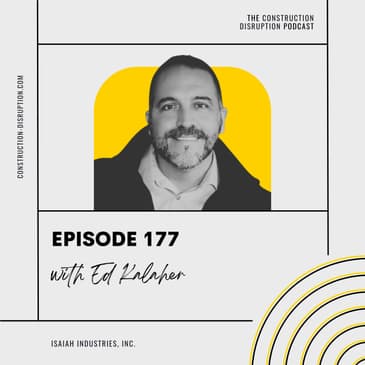
Todd Miller and co-host Ethan Young welcome Ed Kalaher, President and CEO of Window Depot USA, to discuss how contractors can gain an edge and scale beyond a “job” into a valuable business asset. Kalaher shares Window Depot’s origins (founded 2001; acquired by him and partners in 2011) and explains its dealer/licensee model that provides franchise-like support, exclusive territories, and strong peer networking across 90+ business owners in 85 markets.
The conversation highlights key challenges for home improvement contractors—especially lead generation, hiring and developing people, and the importance of in-person and online communities for sharing ideas. Kalaher emphasizes that the leading cause of failure is lack of financial education, advocating that “the math shows you the path.” He also previews his book, The Servant and the Savage, focused on mindset and execution for small business owners.
Timestamps
00:00 Welcome
00:51 Dealer Training Momentum
01:51 Meet Ed Kalaher
03:34 Window Depot Origin Story
06:06 Why Dealers Need Support
10:06 Turning Jobs Into Assets
12:21 Networking and Events
16:44 Market Shifts and Buyers
19:48 Longer Sales Cycles
22:01 The Servant and Savage Book
26:31 Mindset and Balance
27:59 Growth Phases Explained
30:45 Leads and People
31:45 Financial Education First
37:50 Join Window Depot
39:04 Entrepreneurship for Youth
40:46 Rapid Fire Round
46:45 Legacy and Wrap Up
Connect with Ed Online
LinkedIn: https://www.linkedin.com/in/ed-kalaher-60b437/
Website: https://windowdepotpartnership.com/
Website: https://windowdepotusa.com/
For more Construction Disruption, listen on Apple Podcasts or YouTube
Connect with us on Facebook, Instagram, or LinkedIn
This episode was produced by Isaiah Industries, Inc.
Construction Disruption was recently featured in this 15 Best Podcasts for Contractors list!
This podcast uses the following third-party services for analysis:
Podtrac - https://analytics.podtrac.com/privacy-policy-gdrp
I'm Todd Miller of Isaiah Industries, manufacturer of Specialty Metal Roofing.
Speaker:Welcome to Construction Disruption, the show that explores what's working,
Speaker:what's new and what's next in the worlds of construction and remodeling.
Speaker:I'm especially excited about today's show, but first, let me
Speaker:welcome our co-host today, Mr.
Speaker:Ethan Young.
Speaker:How you doing, Ethan?
Speaker:I'm doing good, Todd.
Speaker:It's been a while, but glad to be back.
Speaker:So how are you doing?
Speaker:I'm doing well.
Speaker:Yes.
Speaker:You haven't been on here in a while, and as we have tried to make these shows a
Speaker:little more intentional toward our, uh, intended audience of home improvement
Speaker:contractors, we haven't necessarily been doing one, uh, every week.
Speaker:I guess.
Speaker:What do they call that?
Speaker:We're more about quantity than quality right now.
Speaker:How's that?
Speaker:No, the other way around we're more about quality than quantity.
Speaker:Good job, Miller.
Speaker:Good job.
Speaker:Hey.
Speaker:Fun thing though, the last few weeks.
Speaker:So in the last month, and I, and you've been a part of this too, Ethan, uh, we
Speaker:have run a couple of dealer onboarding sessions for metal roofing contractors.
Speaker:Uh, ran one here in Ohio and ran one this week in Virginia.
Speaker:Um, during those times we have introduced about 50 people, uh, to
Speaker:the world of the in-home sales process for premium metal roofing systems.
Speaker:Probably 25, 30, 35 companies.
Speaker:So that's exciting.
Speaker:There's a lot of energy in our industry right now, I think,
Speaker:for all of home improvement.
Speaker:Just not just premium quality metal roofing, but it's been a blast, uh, to be
Speaker:involved in those recent training sessions where we go extremely in depth on the
Speaker:in-home sales process of our product.
Speaker:So that's been fun.
Speaker:Thank you, Ethan, for your help with making those happen.
Speaker:Absolutely.
Speaker:It's been cool to see, you know, all these new people show up and learn more and be
Speaker:excited to, you know, join the industry.
Speaker:So.
Speaker:Uh, here's the hope, and it, you know, keeps growing.
Speaker:Absolutely.
Speaker:Sounds good.
Speaker:Well, let's go ahead and get rolling with today's show.
Speaker:So I think.
Speaker:Kind of what we just talked about.
Speaker:Everyone in home improvement is looking for an edge today.
Speaker:Um, we're all trying to figure out what can make us stand
Speaker:ahead of the competition.
Speaker:Um, contractors out there trying to figure out what can help them really
Speaker:scale their business significantly.
Speaker:And today we're talking with someone who has done exactly
Speaker:that and continues to do it.
Speaker:Um, ed Kalaher is president and CEO of Window Depot, USA.
Speaker:Um, based in East central Ohio.
Speaker:Window Depot, USA, uh, works with over 90 business owners in
Speaker:85 markets across the country.
Speaker:They rank number 17 on the qualified remodeler top 500 list,
Speaker:and they're the number three national firm in their industry.
Speaker:By working closely with individually owned partners to blend entrepreneurship
Speaker:with national structure and systems.
Speaker:Window Depot provides the perfect balance of strength and local service
Speaker:for their home improvement clients.
Speaker:And today we're gonna talk with a gentleman who has led
Speaker:this successful organization.
Speaker:Into existence and through some considerable growth in recent years.
Speaker:Um, so if you're a contractor out there trying to build something
Speaker:bigger than just a job for yourself, this is definitely a conversation
Speaker:today that you want to pay attention.
Speaker:Ed, welcome to Construction Disruption.
Speaker:It's real pleasure to have you on the show today.
Speaker:Hey guys, good morning.
Speaker:Uh, pleasure to be here as well.
Speaker:Uh, big fan.
Speaker:Um, love the production value, the content, the consistency, um, of the pod.
Speaker:So thanks for, thanks for inviting me.
Speaker:Cool.
Speaker:Well, thank you.
Speaker:We appreciate it.
Speaker:Well, for folks who may not be familiar, um, provide a little background.
Speaker:When did you start?
Speaker:Window Depot, USA.
Speaker:Um, what are you guys all about?
Speaker:How does it work?
Speaker:How are you creating this network, uh, across the country?
Speaker:I.
Speaker:So Window Depot was actually founded in, uh, 2001.
Speaker:And, uh, for those of us that have been, you know, in the remodeling
Speaker:industry, um, or I should say specifically the replacement window
Speaker:industry for, for a good amount of time.
Speaker:Um, they were founded in 2001 as kind of a, uh.
Speaker:Uh, a reaction to the, the rise, the, the quick rise of window world.
Speaker:Um, so there, there's, there's been a lot of kind of franchise like models
Speaker:that have, that have come on seeing their success, uh, in the marketplace and, and
Speaker:wanting to kind of emulate that success.
Speaker:So they were started in, in 2001.
Speaker:Uh, a very, very similar price point oriented model, to be frank.
Speaker:And, uh.
Speaker:Uh, at the time, uh, I was in window manufacturing, so
Speaker:I was on up the supply chain.
Speaker:Uh, so I, I got to see a lot of these businesses, uh, in, in, in that
Speaker:vein, kind of come to the market.
Speaker:And, and, and most go, to be honest, but in 2011, I had the
Speaker:opportunity to, to join some partners and actually acquire that brand.
Speaker:Um, so 2011 is when we, we took over.
Speaker:Um.
Speaker:Window Depot.
Speaker:Um, and for the last 15 years we have been, uh, trying to remold it
Speaker:in, in the image of, of what we saw as a need, uh, for the marketplace.
Speaker:So, um.
Speaker:The easiest way for me to explain what we are to people, 'cause they're so familiar
Speaker:with the word franchise, is honestly we're a Hearts and Minds franchise.
Speaker:That's what I call us.
Speaker:So it's not a formal franchise structure, it's a dealership program, uh, a licensee
Speaker:program to be technical about it, but.
Speaker:The support systems, the methodology, the, the spirit of it is to support
Speaker:our dealers in the way that you would imagine a franchise would, right?
Speaker:From, from top to bottom.
Speaker:Uh, everything that you can imagine, every area of the business.
Speaker:How can we incrementally improve that dealer's, uh, independent business?
Speaker:So we just celebrated our 25th anniversary as a brand, um, and, uh, still feels
Speaker:like we're just getting started.
Speaker:Well, congratulations on the anniversary.
Speaker:That's quite an accomplishment and it's great to still be growing,
Speaker:uh, after that time as well.
Speaker:So, I'm kind of curious, I mean, you know, as you looked at replacement
Speaker:window contractors out there, um, you know, what were some of the.
Speaker:Challenges or problems you saw them facing, um, that you really felt,
Speaker:you know, by tapping into a national organization, this dealership model type
Speaker:thing, you know, that you felt that they could benefit from and, uh, help bring
Speaker:them through some of those challenges.
Speaker:It's, it's a, it's a really good question.
Speaker:Uh, it's one I think about, uh, often, right after 15 years of, of this endeavor.
Speaker:But I think it comes from two, two perspectives.
Speaker:One.
Speaker:You know, the first business I ever started was 1999.
Speaker:So, you know, uh, early, early in my career I went
Speaker:down the entrepreneurial path.
Speaker:Um, and so I've always seen things through that lens.
Speaker:And like I mentioned, uh, I spent the first 15 years or so.
Speaker:Of my career in window manufacturing, uh, and getting to service, uh,
Speaker:replacement window dealers specifically, uh, directly, uh, through that business
Speaker:and just observe, um, how they were operating, what the market looked like,
Speaker:uh, from my position in the supply chain.
Speaker:And what I saw were the things that I, I think would stick
Speaker:out, you know, to anybody.
Speaker:Um, these were, and again, this is why I talk about having an
Speaker:entrepreneurial perspective.
Speaker:Um.
Speaker:I got to deal with hundreds of retail replacement contractors and you know,
Speaker:a pattern really started to emerge.
Speaker:Of course, you know, these were.
Speaker:People who, you know, founded their businesses on that
Speaker:entrepreneurial dream, right?
Speaker:They had an expertise in, in sales, or perhaps installation,
Speaker:et cetera, and they would all face very, very similar challenges.
Speaker:Um, they would, you know, whether it be lead generation or, um, just
Speaker:learning how to financially manage a business, um, you know, obviously
Speaker:access to product, et cetera.
Speaker:So that, that was the first thing that really caught my eye.
Speaker:Just seeing that pattern of issues that a typical replacement window
Speaker:entrepreneur would face out there.
Speaker:And then being in my position in the supply chain.
Speaker:Um, I also saw other models that were, were like Window Depot.
Speaker:And I saw the issues with those.
Speaker:Um, you know, first I saw the, uh, just the pure price point oriented retailers
Speaker:out there that really didn't understand from a financial fundamental standpoint
Speaker:that you, you know, giving away product, make, make your numbers look good and
Speaker:keep your crews busy and make the phone ring, but it's ultimately unsustainable.
Speaker:So.
Speaker:I saw a lot of, again, independent retailers that didn't have that,
Speaker:that financial sense to really build a sustainable business.
Speaker:Um, they were on an island as an entrepreneur, they wanted good
Speaker:product, and then it starts to make you think, why isn't there a franchise
Speaker:type of support system out there?
Speaker:Like that.
Speaker:Um, so it just became a no-brainer.
Speaker:There's a need in our business, um, to help those independents to band together,
Speaker:uh, to share collective knowledge, you know, to access quality products, et
Speaker:cetera, to get financial education.
Speaker:So, like I said, it's kind of, it's a big question, but all of those
Speaker:things kind of conspired when the opportunity arose for me to go from
Speaker:the wholesale side of the business into the retail side of the business.
Speaker:And I really felt like.
Speaker:From an entrepreneurial background and my manufacturing experience, I
Speaker:thought I could bring a lot to the table and help these, these retailers
Speaker:who I had supported with product.
Speaker:Um, but I thought I could support 'em in a lot of different ways to actually build
Speaker:sustainably profitable businesses, right?
Speaker:Assets of value, help them achieve that dream.
Speaker:Um, you know, that we all have, as you know, a blessing
Speaker:or curse as entrepreneurs.
Speaker:You know, I think that's interesting and one of the things that I know often
Speaker:kind of occurs to me, I'll look at so many home improvement contractors
Speaker:who, you know, spend their entire.
Speaker:Career just, you know, busting their tails to build their business.
Speaker:And yet they haven't built anything more than something that became a job for them.
Speaker:And at the end of their career, they're thinking of retiring.
Speaker:They find out they really don't have anything of value there other than perhaps
Speaker:some used equipment and maybe a phone number someone might be interested in.
Speaker:So I, I'm kind of curious.
Speaker:Um.
Speaker:As a Window Depot, um, dealer, if you will.
Speaker:Um, what is their opportunities to interact with each other or to
Speaker:interact with you and corporate?
Speaker:Um, from a practical standpoint, what does that look like for them?
Speaker:Yeah, there, I don't think there's any bigger fan of entrepreneurs in general
Speaker:or small business owners than me.
Speaker:I, I really appreciate them on many, many levels.
Speaker:Uh, one, just my own, you know, 25 plus years of, of the grind as it were.
Speaker:I, I've come to respect it.
Speaker:Um.
Speaker:Also you, you only sustain that long because of that
Speaker:spark, that original dream.
Speaker:You know, the, the, the ability to control your destiny, to create some
Speaker:security, some financial independence, some abundance for your family.
Speaker:Um, and that goes back to what, what we had just talked about.
Speaker:I saw so many scenarios.
Speaker:That's actually the norm in our business, what you just mentioned, right?
Speaker:Um, these guys and gals start businesses with great intentions.
Speaker:They do good work, but.
Speaker:They just don't have the F perspective and the framework to
Speaker:turn that into an asset of value.
Speaker:And it does end up just being a job for them over time.
Speaker:Um, and, and frankly, I, I hate that.
Speaker:I feel for them.
Speaker:I've lived through that myself.
Speaker:Um.
Speaker:It's, it's the, probably the biggest thing that drives me is to help
Speaker:them turn that dream into a reality.
Speaker:Again, create that abundance, that financial security, uh, et cetera.
Speaker:So this, this company, you know, this network, window Depot is, is a
Speaker:vehicle for me to pursue my purpose just like they want to pursue theirs.
Speaker:Um, but to your question, to, to your point.
Speaker:You know, from a, from a practical standpoint, the, the networking, the
Speaker:sharing of ideas, the connecting with other entrepreneurs that are in the same
Speaker:exact position that they are, um, you know, some behind their, their phase and
Speaker:maturity and some ahead to inspire them.
Speaker:It sounds cliche, but you know, if, if I cast aside, you know, the tremendous
Speaker:products that we can access, the leads that we can generate, the sales
Speaker:training we can provide, et cetera, the, the networking, the comradery,
Speaker:again, the idea sharing, um, the perspective building, honestly, it's
Speaker:the biggest part of, of what we have.
Speaker:Um, when a. Entrepreneur, a small business owner, et cetera, when they can relax,
Speaker:kind of drop the part of the, the ego that that made them an entrepreneur in
Speaker:the first place and connect with others that are again, doing the same exact
Speaker:thing that they are on a daily basis.
Speaker:Um, those conversations to see how their eyes light up because we think it's
Speaker:obvious, but it's just not when you are in the fire of running a small business
Speaker:and trying to grow that, that asset.
Speaker:Um.
Speaker:You might understand, you know, kind of intellectually that other people are
Speaker:doing the same thing and they're facing the same challenges, but you're just too
Speaker:wrapped up and it doesn't occur to you.
Speaker:And when you have that conversation, you say, oh my goodness, you are, you
Speaker:know, you're in, you're in the same boat.
Speaker:You, you feel that too, that those aha moments and when
Speaker:those, when those happen, right?
Speaker:When somebody joins our network.
Speaker:Um, you know, we want to connect them with mentors and peers that
Speaker:are kind of in the same stage of the business, uh, that they're in.
Speaker:And that's, that's the first connection they get, whether it be to evaluate the
Speaker:services and, and such that they get from our office, um, or as they get into it.
Speaker:Uh, just to, to start that peer to peer type of process.
Speaker:Um.
Speaker:Now we can extend that, right?
Speaker:There's a lot of that connection online, but the real magic happens
Speaker:with our in-person networking, right?
Speaker:First and foremost at our, our national event that we have in January each year
Speaker:where there's a hundred entrepreneurs in the same room talking about the same
Speaker:thing, comparing war stories, et cetera.
Speaker:Um, we've broken that down into regional meetings so we can be a little bit
Speaker:more efficient and get people together.
Speaker:You know, on a more routine basis, but the more things that we can do to
Speaker:foster, uh, and again, as you said, like practically, how does that happen?
Speaker:Um, it, it's just, as you would expect, we, we try to foster it in
Speaker:our online community via, you know, chat and email and, and, and, and
Speaker:real time messaging that we have.
Speaker:Um, you know, we, we try to do.
Speaker:Online meetings with the group, but we really are always looking for
Speaker:ways to get people face to face.
Speaker:Uh, 'cause again, that's, that's, that's where the magic really, really happens.
Speaker:Sounds like a, a perfect opportunity for businesses to grow and thrive by, uh.
Speaker:Learning from each other and sharing with each other.
Speaker:And people love to share with each other too.
Speaker:So, uh, share their experiences with
Speaker:They do pe people nod their head when you, when you talk about these things, right?
Speaker:They, they're all gonna say, yeah, of course.
Speaker:Um, but it, it, it doesn't happen as much as people would think.
Speaker:And I, I don't, I don't know exactly why.
Speaker:I think it's a combination, right?
Speaker:I think it, it is part.
Speaker:Ego, to be honest with you, right?
Speaker:People are a little close to the vest.
Speaker:And who, who can I share with?
Speaker:Um.
Speaker:And, and that's the beauty of our network because when you join, um, it's
Speaker:built around exclusive territories.
Speaker:So that should let your guard down.
Speaker:You're not you, you're not having peer conversations with potential competitors.
Speaker:We're on the same team.
Speaker:We're re representing the same badge as it were.
Speaker:Um, and that really lets people talk freely.
Speaker:I, I've hosted dealer meetings on the manufacturing level.
Speaker:Um, and, and those can be productive, but ultimately everybody
Speaker:in the room is a competitor.
Speaker:I've been to industry, you know, trade shows, wonderful, soak in a
Speaker:lot of content, but you in a room full of competitors ultimately.
Speaker:Right?
Speaker:Um, so being part of a, a network and a group, uh, that has, again,
Speaker:the same badge, a shared message, um, that, that they, they know they're
Speaker:working together cooperatively and they're not gonna compete it.
Speaker:10 x is the amount of sharing that can happen out there.
Speaker:And as a consequence, it 10 x is the amount of aha moments,
Speaker:uh, that we get to see.
Speaker:And that, that's, I'll overuse it, but that that's the magic.
Speaker:Very neat.
Speaker:Well, I'm curious, I mean, as you listen to folks these days,
Speaker:um, what are they talking about?
Speaker:Are they.
Speaker:Seeing any changes in consumer behavior in regards to home improvement, or
Speaker:are there any things that are really high on people's minds right now?
Speaker:You know, in terms of the marketplace and the consumer, you know, um, there are
Speaker:certainly, uh, there, there are certainly things specific kind of quantitative
Speaker:changes that are that, that, that, that have bubbled up lately in our, our
Speaker:topics of conversations such as, um.
Speaker:Just the research phase and the changing demographic of how people
Speaker:are consuming their information.
Speaker:We know that, um, there's also, um, a longer period it seems for the last
Speaker:three to four years, um, from initial visit to, to the close of that job.
Speaker:Um, there's still plenty of, uh, of companies and, and a a lot of our
Speaker:dealers, um, you know, their goal is to to close business on, on the first visit.
Speaker:Um, but, but that certainly is changing, you know, that consumer is changing
Speaker:again, how they consume their information.
Speaker:Um, just the, the time period, the decision making time period.
Speaker:I think that's, that's certainly, uh, different.
Speaker:Um, but besides those kind of quantitative and just, you know, real world kind
Speaker:of changes out in the marketplace, I think it's, it's really, you
Speaker:know, it's related to, you know, uh.
Speaker:That consumer attention span and how specifically technology is
Speaker:affecting, um, that sales cycle.
Speaker:I think that's the biggest thing that's going on out there.
Speaker:And for, for the first time, it's not something that dealers are
Speaker:reacting to, you know, acutely.
Speaker:It's the unknown of what is just around the corner because
Speaker:things are changing so rapidly.
Speaker:So I don't know if that was.
Speaker:Succinct necessarily.
Speaker:But, uh, it is a, uh, it's an, it's a strange time, um, to be in the industry.
Speaker:And I, I, I think I can say that honestly, because, you know, we've, we've both lived
Speaker:through, you know, nine 11, you know, the great recession, COVID, et cetera.
Speaker:Um.
Speaker:But certainly I think, you know, decision making timeline, how
Speaker:consumers are consuming that information in that research phase.
Speaker:Uh, but really what is about to happen?
Speaker:Are there going to be, you, you mentioned earlier when we were
Speaker:speaking online price tools, you know, those have been around for 20 years.
Speaker:Um, they've never gained any traction, right?
Speaker:The, the industry doesn't really want that, but does the consumer
Speaker:want it enough to pull it through?
Speaker:Um, we just don't know.
Speaker:And you know, that's all related to the research phase.
Speaker:It's all related to the age of our consumers and what they grew
Speaker:up with and how they expect to be treated, uh, in the buying process.
Speaker:So strange and interesting days.
Speaker:Absolutely is, and we certainly have also noticed that extended buying cycle, if you
Speaker:will, or decision making process and you know, kind of tease that out a little bit.
Speaker:Matt, do you think it's happening?
Speaker:Just because, again, as you talked about, people have so many options
Speaker:out there to gather information and to do research that they feel like they
Speaker:need to take that time to do that.
Speaker:Or maybe technology has just sped up and so people are
Speaker:actually entering the market.
Speaker:Sooner than where they used to enter, rather than really
Speaker:close to their decision time.
Speaker:Yeah, I think those are certainly factors.
Speaker:Um, you know, we're in a finance society.
Speaker:Um, you know, the further you go back, you know, people would kind of save for
Speaker:these type of improvements and they.
Speaker:Were ready to make decisions.
Speaker:Um, there wasn't the access to information that they could
Speaker:really plan the research phase.
Speaker:So everything culminated at the point of, you know, of the pitch, so to speak.
Speaker:you know, these days, all of those layers, um, add to the
Speaker:empowerment of the consumer.
Speaker:Um, you know, they didn't necessarily save up for the purchase and get ready to
Speaker:be educated, you know, by a contractor, make a decision, et cetera, et cetera.
Speaker:They said they can look at any time during, during the cycle.
Speaker:They, they can research and, and gather data long before
Speaker:they plan to make the decision.
Speaker:Um, so I think all those things are just being layered in, um, to the market,
Speaker:to our typical demographic to who, you know, uh, I expect us to really be able
Speaker:to analyze that honestly in the next year better than we ever have, just because.
Speaker:All of our CRMs now are moving into just natural language, you know,
Speaker:queries to see that because what, what we're talking about, those nuanced
Speaker:layers of how the consumer thinks and how that adds to the lifecycle of
Speaker:research and purchase, et cetera, um, those aren't always easy to glean.
Speaker:You're kind of going by gut and you're kind of going by anecdotal evidence
Speaker:in the field, but I think, you know, we're gonna have a, a, a much better
Speaker:handle on that, you know, very soon.
Speaker:Very good.
Speaker:Yep.
Speaker:Good point.
Speaker:So I understand that you are working on a book, uh, geared towards small and
Speaker:mid-sized business owners and leaders.
Speaker:Um, tell us about that.
Speaker:What, what are you gonna be calling it?
Speaker:Um, what's it about?
Speaker:When can we expect to see it?
Speaker:Well, our friend Ron, must have told you about that.
Speaker:Um, I, I, I appreciate it.
Speaker:But, uh, the book is called The Servant and the Savage, and, and, um,
Speaker:really it is, it's a, it started as a book for, for myself, quite frankly.
Speaker:But, you know, every small business owner is familiar with that
Speaker:phrase, uh, wearing all the hats.
Speaker:Uh, when you're in that position, um, that kind of dependency that can get,
Speaker:you know, it can be invigorating when you start a business, but then it can be
Speaker:overwhelming, um, as it goes on because you know, when you, when you wear all
Speaker:the hats and you're, you're the center of everything that drives that business.
Speaker:Um.
Speaker:Whelm comes from, you know, what do I do next?
Speaker:Where do I start?
Speaker:Um, I had a dream when I started this business, but it's being clouded by all
Speaker:the things that are coming at me and I'm trying to react and, you know, et cetera.
Speaker:Uh, and that, and that happened to me, you know, many times along the way and.
Speaker:As I started to see patterns of how, by personally I could find clarity
Speaker:through all that, that chaos, uh, it just became a way of thinking.
Speaker:So the servant and the Savage really represent, um, you know, two parts
Speaker:of a mindset to help specifically small business owners, right?
Speaker:'cause we have unique challenges to help them, uh, again, find that clarity and
Speaker:uh, uh, be able to pursue that purpose.
Speaker:So the book is really, um.
Speaker:Mostly philosophy on how to develop that mindset, uh, and then part
Speaker:strategy on how to execute it.
Speaker:Um.
Speaker:Comes from, uh, kind of a, a, a balanced approach.
Speaker:Um, whereas a lot of times I would see business challenges, mostly
Speaker:failures, to be honest with you and say, how did I screw that up?
Speaker:And it usually came from, you know, one of two sides, you know, either.
Speaker:Uh, I was kind of too empathetic and, and slow to react and act, um,
Speaker:or, um, I just disregarded the, the signals and the people in front of
Speaker:me and, and just charged forward so fast that I, they burnt a bridge.
Speaker:So it kind of became the embodiment of that mindset that I knew I wanted to have.
Speaker:You know, I wanted to lead with a servant's heart, but
Speaker:I wanted to, and I needed to.
Speaker:Execute like a savage in the marketplace.
Speaker:And, and once I started to think that way, uh, things just got easier.
Speaker:Uh, you know, I'm sure part of it is experience and maturity, et cetera.
Speaker:Um, but about five or six years ago, really kind of during COVID and, and
Speaker:kind of some of those reflective times, I said, I, I wanna put this on paper.
Speaker:Um, and, and the more I did, the more I thought it's helping me.
Speaker:But it also would help.
Speaker:Other small business owners, and that is my business.
Speaker:My business, my day-to-day business is to help small business owners.
Speaker:Um, so it's become kind of foundational content to a lot
Speaker:of the training programs that we develop for Window Depot, et cetera.
Speaker:Um, but I also, I hope.
Speaker:I hope it's something that'll be of service to any, any small business owner.
Speaker:So in terms of an elevator pitch, that was terrible, right?
Speaker:That should be succinct, but, uh, um, but I actually just finished
Speaker:the final manuscript two days ago.
Speaker:Oh wow.
Speaker:so, um, so I actually haven't been asked the elevator pitch question before.
Speaker:Well that's, I love the title.
Speaker:The Servant and the Savage is a great title.
Speaker:And you know, you're obviously a very thoughtful, you know, guy who, uh, has
Speaker:processed this, been in the trenches, um, but also figured out how it's really
Speaker:impacted you, how it's impacted your family, how it's impacted your business.
Speaker:Oh my goodness.
Speaker:And that's why I said when we started, said, you know, 25 years, you know,
Speaker:16 with Window Depot and, and.
Speaker:Again, sounds cliche to say, I think we're just getting started, but I think
Speaker:that's, 'cause I feel like I'm just getting started and that's, that's one
Speaker:of those, whatever you call it, you know, uh, catch 20 twos of life, I suppose.
Speaker:Right.
Speaker:You know, I'm, I'm about to be 53.
Speaker:Um, you know, I got outta university in 95, you know, and I was, you
Speaker:know, before that I was loading trucks in a, in a window factory.
Speaker:So I've been in this, this.
Speaker:Replacement window game for 30 years.
Speaker:And between, you know, that developing that perspective and just the, the,
Speaker:again, the, the nine elevens, the 2000 eights, the COVID, just the things that
Speaker:I've seen, um, I feel more empowered.
Speaker:So again, 53, it's time to get busy.
Speaker:Um, but, but this, this, this mindset for me, it's a rallying cry.
Speaker:And again, that's why I wanted to put it on paper and share it with people because.
Speaker:Not only when you're a small business owner, is there really no, you
Speaker:know, work life balance, right?
Speaker:That doesn't really exist.
Speaker:The goal is more to, you know, hone that that business into something
Speaker:that is supported supports the lifestyle you want, but also, um.
Speaker:When you're developing the traits that it takes to make that small
Speaker:business successful, I, I think you're developing the same traits that it
Speaker:takes to, to make you more successful as a man, as a husband, as a father,
Speaker:you know, as, as a person in society.
Speaker:So when you said, you know, home life, uh, and business a hundred percent,
Speaker:um, yeah, I'm excited to, to, to share more of those philosophies.
Speaker:Well, good stuff.
Speaker:We're gonna watch for that to come out and once it comes out and a couple of
Speaker:us have the opportunity to read it, uh, we'll have you back on the show.
Speaker:It'd be fun to kind of unpack it a little bit and, uh, promote the
Speaker:book, uh, a little bit that way.
Speaker:So we'll, we'll do
Speaker:That
Speaker:would be.
Speaker:Um, I wanted to touch on something you've brought up a couple times throughout
Speaker:these challenges, that small business.
Speaker:Owners face.
Speaker:And I know obviously, you know, you've had experience with it and you've been able
Speaker:to see all these different experiences that other, uh, small business owners
Speaker:have dealt with, especially as they scale and as they learn to like work on the
Speaker:business instead of work in the business.
Speaker:What are some of those challenges and how can they, you know, how,
Speaker:how, how can they deal with them?
Speaker:How does Window Depot help them deal with them?
Speaker:Yeah.
Speaker:No, it's, it's a, it, it's an awesome question and it, and it's part, I think
Speaker:part strategy, part tactical, right from the strategic side, we actually, you know.
Speaker:Being able to service, um, so many dealers over the years.
Speaker:Um, what I like to say is we, we don't have all the answers, but we,
Speaker:we probably have a better perspective than anybody out there that that's
Speaker:the, that that's the fun part.
Speaker:So many conversations, you know, reviewing so many financial statements, you know,
Speaker:seeing so many different marketing plans we can, we can see, um, and, and, and
Speaker:build that perspective and, and we've.
Speaker:Really started to identify, um, kind of four different phases, um, of growth for
Speaker:the typical home improvement contractor.
Speaker:And for me, the, the, the typical home improvement contractor is
Speaker:really kind of $10 million and below.
Speaker:Um, like I know everybody will go to industry shows and think that I'm
Speaker:sitting in a room and because there's a guy on stage that scaled his business
Speaker:to 50 million, I'm surrounded by.
Speaker:You know, a bunch of guys that are doing 10, 20, 30, you know, million.
Speaker:That's just not the case.
Speaker:I mean, our industry is made up of one to $3 million contractors.
Speaker:That is the bulk.
Speaker:I don't care what anybody tells you.
Speaker:Um.
Speaker:Now most of those, those entrepreneurs in that, you know, zero to two and a half,
Speaker:$3 million space, um, they absolutely have the ability to get to a five.
Speaker:And a five is a significant milestone on a number of fronts.
Speaker:Um, a few of them have the ability to go from five to 10, in my opinion.
Speaker:Um, but.
Speaker:And beyond 10, you know, that, that, that's, that's rare air.
Speaker:Um, you know, we have some dealers in our network that have now eclipsed
Speaker:that mark and it's wonderful.
Speaker:Um, but it takes a certain set of skills.
Speaker:It really does, and a certain outlook and a certain leadership style.
Speaker:So we've identified kind of these four zones and in every zone.
Speaker:Right.
Speaker:The, the challenges are a bit different.
Speaker:The, the needs of that entrepreneur, that business owner and leader, they
Speaker:change and they evolve over time.
Speaker:And so, you know, each has their own set of challenges and that's something
Speaker:that we really try to speak to, um, and crossover into the tactical right.
Speaker:So to speak, to just kind of some of the brass tacks challenges that are out there.
Speaker:You know, of course the, the, the things that you, you might think about, right?
Speaker:Um, you, you wanna do more business, you gotta have more opportunity, right?
Speaker:You know, lead generation is, is always gonna be pretty much number one.
Speaker:Although I, I like to say that our business boils down to two
Speaker:things and two things only.
Speaker:And it, it's leads and it's people.
Speaker:Um.
Speaker:You, you've gotta have opportunity, but you're really not gonna scale.
Speaker:Uh, again, as the center of the universe, you've gotta have, uh, the right people.
Speaker:So.
Speaker:Having a, a leadership mindset to recognize those patterns.
Speaker:Um, that's one thing, again, that's the strategic side of
Speaker:the challenges that we see.
Speaker:Um, but then we try to build programs, whether they be, you know,
Speaker:training programs, coaching programs, physical, you know, tools, uh, et
Speaker:cetera, to, to help them address the challenges in each of the four phases.
Speaker:Now, I will say, from a super practical standpoint.
Speaker:If you look up online, uh, and say, you know, why do most small businesses fail?
Speaker:You know, you're, you're gonna see very similar answers on from every article.
Speaker:They're gonna be about, you know, uh, you know, not a fit in the marketplace.
Speaker:They're gonna say cash flow, they're gonna say that, that general,
Speaker:you know, statement, et cetera.
Speaker:Um, but really, um, I have rarely seen.
Speaker:Home improvement contractor, uh, go out of business for lack of
Speaker:opportunity in front of them.
Speaker:By and large, uh, the number one reason that I've ever seen is
Speaker:a lack of financial education.
Speaker:It is the financial fundamentals that will allow them.
Speaker:To grow and scale a business, become sustainably profitable and get out of
Speaker:that trading my time for money phase.
Speaker:Um, so again, from a super practical perspective, the challenge of
Speaker:understanding the language of finance, uh, is, is the number one challenge.
Speaker:And that goes from startup and it continues through the five,
Speaker:10, $20 million contractor.
Speaker:I think that's definitely on.
Speaker:It's something we've talked about with other guests before and it seems to
Speaker:come up, you know, that's, that's always a challenge for people that are used
Speaker:to, you know, and focused on offering their business and, you know, working
Speaker:with customers and then and all this stuff is just kind of a different field
Speaker:for them so they can struggle, but.
Speaker:It's a difficult, um, it's a difficult topic to, to penetrate.
Speaker:It really is.
Speaker:You, you've got a lot of, um, ego and insecurity that go into, um, you know,
Speaker:discussing financial acumen and education.
Speaker:Uh, it's something that we try to do from minute one.
Speaker:Uh, and, and honestly.
Speaker:15 years ago, 10 years ago, you know, I would've said, you know, product sales
Speaker:training, some of these things were the, the, the, the most impactful activities
Speaker:that we could do for our dealers.
Speaker:But, um, if I answered that question today, it's going to be the networking
Speaker:as I, as I mentioned, and it's going to be financial education.
Speaker:Um, we try to start from, from day one by saying, you.
Speaker:You're not gonna join this network and become a part of this group
Speaker:without a solid financial plan.
Speaker:Um, if you don't have one, we wanna get right in there and build one with you.
Speaker:And this is the part where it gets a little bit tricky because the people
Speaker:that generally wanna start a business, right, you know, they've got, you
Speaker:know, some gravity to them, right?
Speaker:They've got some ego that drives them, uh, in, in a good way, right?
Speaker:But, um, if you press and you play devil's advocate.
Speaker:You say, do you really understand these numbers?
Speaker:And if not, that is okay, let's walk through this together.
Speaker:They've gotta bring down their barrier in order to let that happen.
Speaker:Um, but it is by far and away, um, the number one challenge.
Speaker:Markets can change, products can change, consumers can change.
Speaker:But in my experience, the, the companies that don't make it, um,
Speaker:they don't know the math that will.
Speaker:Show them the path.
Speaker:I'm gonna coin that phrase.
Speaker:There you go.
Speaker:Yeah.
Speaker:That's a good phrase.
Speaker:So, so I like that.
Speaker:So, you know, you would tell folks who may be looking for, gosh, what
Speaker:should I really be focusing on?
Speaker:Um, sounds like networking relationships, but then their, your numbers and.
Speaker:Making sure that you understand them and, and you're creating them.
Speaker:I find so many contractors don't even create a financial statement until a year
Speaker:end statement, and then they're trying to hustle to pull everything together,
Speaker:It's the norm.
Speaker:Uh, it's not the exception.
Speaker:Uh, I mean.
Speaker:I, it's, it's, uh, it shouldn't surprise me anymore, but it still does.
Speaker:Um, the thing I feel blessed about recently is, you know, being in
Speaker:the business for a good amount of time, starting to, to, to
Speaker:gray out, um, you know, at least having some semblance of, uh.
Speaker:Respect and authority.
Speaker:Just okay.
Speaker:You've lasted this long, your message has been consistent.
Speaker:I've found that in the last couple of years, our dealers specifically
Speaker:have opened up more than they ever have to myself and our team, and
Speaker:allowed us in to help them really get that financial house in order.
Speaker:Um, and I think when they see it again, it becomes an another aha moment.
Speaker:Things that, you know, we may look at and, and think are common sense.
Speaker:Um, it's just not, I mean, the people who comprise our industry, uh, and,
Speaker:and, and the best of the best, right?
Speaker:They, they, they may be great at selling, they may be great at.
Speaker:Installation and craftsmanship.
Speaker:You know, they may create the most wonderful customer experience
Speaker:out there and differentiate themselves from the competition.
Speaker:And, and, and they can have all of the market share that they want.
Speaker:But, you know, no one came from, um, you know, a, a bachelor's in finance
Speaker:or, you know, sat for his CPA and, uh, uh, said, you know what, I'm
Speaker:gonna, I'm gonna go swing that hammer.
Speaker:Uh, it just, it just doesn't happen.
Speaker:So people are just missing that We know that it doesn't get,
Speaker:you know, really that foundation doesn't get set in in high school.
Speaker:You know, it doesn't, early on, it's not part of our upbringing.
Speaker:Um, and fortunately, uh, you know, I was forced to review and produce
Speaker:financials, uh, from an early age.
Speaker:Uh, and, and I love to try to help and, and share that and show
Speaker:them that the mathematics, you know, the math shows you the path.
Speaker:It always does.
Speaker:So if there's a contractor out there saying, gee whiz, I really like what
Speaker:Ed's saying, love to, uh, be a part of, uh, the Window Depot network.
Speaker:Um, what's that look like for them to join you folks?
Speaker:So you mean if they, if they, if they said, Hmm, this guy's telling
Speaker:me to drop my ego and then I
Speaker:Exactly.
Speaker:Yeah.
Speaker:Yeah.
Speaker:where, where can I go?
Speaker:And, and, uh, no, I appreciate that.
Speaker:The, uh, the easiest way is Window Depot partnership.
Speaker:Com.
Speaker:Um, obviously, you know, any Window Depot search, we're on all the
Speaker:social channels, window depot us com.
Speaker:But if, if there's a dealer that says, Hey, um.
Speaker:Why am I doing this alone?
Speaker:Why wouldn't I connect with other remodelers?
Speaker:Why wouldn't I access financial education and, and, and other training
Speaker:programs that we have out there?
Speaker:Why wouldn't I want tremendous buying power to access better products, to
Speaker:create a better customer experience?
Speaker:Um, the easiest way is window depot partnership.com.
Speaker:Um, I love those conversations.
Speaker:Well, ed, it's been a real pleasure to have you with us
Speaker:today and a privilege as well.
Speaker:Is there anything we haven't covered that you wanted to be
Speaker:sure to share with our audience?
Speaker:I think the, the only thing that comes to mind, and it's because you,
Speaker:you said something, um, that got me excited about the connection between,
Speaker:um, the business strategy and, and the life strategy is, you know, you.
Speaker:Part of, part of the reason I wanted to put those thoughts on paper
Speaker:was, yes, for me has evolved into helping our dealer base, but just
Speaker:sharing a message with entrepreneurs.
Speaker:Um, but it's also about my children.
Speaker:Um, I don't know if they'll be entrepreneurs, but I want them to
Speaker:have a glimpse of the qualities it takes in a human being to
Speaker:create a successful business.
Speaker:Um, so.
Speaker:The thought.
Speaker:And what, what I'm getting to is, uh, I hope that all of us as small business
Speaker:owners preach the message, uh, to, to every young person that we can.
Speaker:Uh, you're young, start a damn business.
Speaker:It, it will teach you so much, you know, about life.
Speaker:Uh, and if, and if, and if that helps them get to a point where
Speaker:they're, they're 32 and, and they can.
Speaker:See the world as I'm seeing at 52, I, I think the world would be a better place.
Speaker:So I don't that, that was just in my mind.
Speaker:I don't want to end on too philosophical a note, but, uh, uh, yeah, the personal
Speaker:side, my children, like, I think young people should be entrepreneurs.
Speaker:I think it's, uh, it should be celebrated.
Speaker:I'm a huge fan.
Speaker:I'm a huge fan of yours.
Speaker:Um, I love small business owners.
Speaker:Yeah, I'm, I'm right there with you.
Speaker:I agree.
Speaker:I agree.
Speaker:Well, this has been a great time together and very fun.
Speaker:So I have to ask you if you're willing to participate in something
Speaker:we call our rapid fire questions.
Speaker:So, uh, these are five.
Speaker:Question.
Speaker:You don't know what they're gonna be.
Speaker:Some may be silly, some are a little more serious.
Speaker:Um, all you have to do is give us a quick response.
Speaker:Uh, are you up to the challenge?
Speaker:I'll do my best.
Speaker:Cool.
Speaker:I know you'll do great.
Speaker:Ethan, you wanna ask the first one?
Speaker:Yeah, I can do that.
Speaker:What's a new product or service that you've gotten recently that
Speaker:was like a game changer for you?
Speaker:I think it's, uh, I think it's the voice recording and transcription
Speaker:softwares that are out there now.
Speaker:Um, I even feel like I was a little bit late to that game.
Speaker:Um.
Speaker:But now that we're in it and now that we're seeing the patterns
Speaker:that could be recognized from those conversations, I think that's, that's
Speaker:probably this year or next year.
Speaker:I think that's, that's gonna make the biggest impact in
Speaker:our, in our industry right now.
Speaker:So, um, the, the, the zeros out there and Thes You're welcome.
Speaker:I'll
Speaker:Yeah.
Speaker:Yeah.
Speaker:I'll take that affiliate commission.
Speaker:Nope.
Speaker:And that's, that's good insight too.
Speaker:I, I am, I hear, hear what you're saying.
Speaker:It's hard, right?
Speaker:It's, it's hard because there's not, there's not a lot of
Speaker:innovation that's happened in our business in the last 10, 20 years.
Speaker:Um, we're, we're kind of behind the, the curve in r and d as,
Speaker:as an industry niche, right?
Speaker:But, uh, but that, that tech seems to be moving the needle.
Speaker:Yeah, absolutely.
Speaker:And I know even when I sit in industry meetings with other
Speaker:manufacturers, I'm even always challenging those manufacturers.
Speaker:We need to figure out what this thing looks like in the future, because it
Speaker:is, it can just be slow sometimes.
Speaker:And, you know, human safety's involved, so it should be somewhat slow.
Speaker:Certainly shouldn't be ra but, uh, I'm, I, I wanna see the future before
Speaker:I die, I guess is where I'm at today.
Speaker:I don't know.
Speaker:Okay.
Speaker:Question number two, what did the 8-year-old ed want to be when he grew up?
Speaker:Ooh, 8-year-old, um, I think 8-year-old was a professional baseball player.
Speaker:Awesome.
Speaker:Uh, yeah.
Speaker:And then evolved into professional basketball player,
Speaker:which was even more insane.
Speaker:But yeah, I think yeah, eight was all about little league.
Speaker:What's a ridiculous thing that you or your company has run into on a job site
Speaker:Ooh.
Speaker:A ridiculous thing.
Speaker:or memorable?
Speaker:Either way.
Speaker:Yeah.
Speaker:There's, there, there's a lot of 'em, and, and they go from.
Speaker:You know, ridiculous is an interesting word.
Speaker:Uh, I think one of the most ridiculous things that I ever have seen is giving
Speaker:an estimate to replace a window that next to the window, uh, in a child's bedroom,
Speaker:there was a hole in the house, not a hole in the wall, a hole in the house.
Speaker:I that I could put my hand through.
Speaker:Um, but we were there to give estimates to replace those windows.
Speaker:Uh, even with, I don't know why that that came to mind.
Speaker:Uh, if we were here for another half hour, I could probably come
Speaker:up with 10 or 20 ridiculous things, you know, as every contractor would.
Speaker:So, so quick story on one of mine that I'm reminded of.
Speaker:So, um, a number of years ago we had had someone pitch us on the idea of
Speaker:putting a roof on their, uh, house.
Speaker:They were part of a magazine and they were gonna promote us online and stuff,
Speaker:and it was pretty small and we had time.
Speaker:So we went ahead and did it and actually sent out our own installer to
Speaker:put it on and all that type of stuff.
Speaker:About two years later, I get a call from some.
Speaker:A lady who I didn't know who was extremely frantic, and she's saying,
Speaker:you put a roof on my house and I didn't know anything about it.
Speaker:Well, here the person we'd been working with was a renter, had never told
Speaker:us that why she wanted to do this.
Speaker:I have no idea.
Speaker:I still don't understand it.
Speaker:Um, but in the end, the actual owner and I ended up pretty good friends,
Speaker:so it all worked out, I guess.
Speaker:Yeah.
Speaker:That, that's ridiculous.
Speaker:I, I, I thought of one more.
Speaker:Uh, and, and I, I don't want to be.
Speaker:Rude to a really good customer.
Speaker:Actually, that's turned out, but uh, a couple years ago we
Speaker:did a custom color match and we installed flamingo pink windows
Speaker:Oh wow.
Speaker:into a home.
Speaker:So, I don't know if ridiculous is the word that seems a bit negative,
Speaker:but it, it's sticks out, that's for sure.
Speaker:but, but what a cool industry that we can actually do something
Speaker:like that if someone wants it.
Speaker:That's a good way to look at it.
Speaker:Okay.
Speaker:I think it's on to me now, Ethan.
Speaker:Yes.
Speaker:Um, so what's a great piece of advice you would have for someone
Speaker:who's starting their own business?
Speaker:I feel like you've already given so
Speaker:Oh boy.
Speaker:Yeah.
Speaker:Yeah, that's a, that's a good one.
Speaker:That's also one I should have in the holster.
Speaker:So a piece of advice for somebody starting a business.
Speaker:Know your numbers Done.
Speaker:Know your numbers.
Speaker:If you want to talk about that for the next hour, let's go.
Speaker:Yeah.
Speaker:know, know the numbers.
Speaker:It's not enough to have a passion for the craft.
Speaker:It, it really isn't.
Speaker:It, it's enough to give you a job, as you mentioned earlier.
Speaker:It's, it's, it's not enough to build an asset of value.
Speaker:Um, I think, uh, you're familiar with the, uh, the, the E-Myth book series,
Speaker:Sure.
Speaker:Um, uh, Michael Gerber.
Speaker:Yep.
Speaker:I think he, uh, I think he calls it the fatal assumption
Speaker:Hmm.
Speaker:where entrepreneurs mistake their expertise in a product or a service for
Speaker:their ability to, to start a business.
Speaker:And it's absolutely right.
Speaker:And I would just funnel that down into, all right, how do you prioritize then
Speaker:what I gotta focus on my piece of advice.
Speaker:Know the numbers a hundred percent.
Speaker:Good, good advice.
Speaker:Last question.
Speaker:Oh, this is a good one too.
Speaker:of touched on this a little bit, but at the end of your days, what
Speaker:would you like to be remembered for?
Speaker:Like what would your, what would you want your legacy to be?
Speaker:Oh my goodness.
Speaker:That is crazy.
Speaker:That's, uh, that's the toughest right there.
Speaker:Um, but I think.
Speaker:I think it's easy for me.
Speaker:Um, and it's easy for me because honestly, of this, uh, book writing
Speaker:process, I, I, I, I don't, I don't need to be remembered as, as somebody
Speaker:who, who could build a business.
Speaker:I want to be remembered for doing my best to lift up those
Speaker:around me through the process.
Speaker:Uh, and I want my children to remember, you know, someone that was, that walked
Speaker:the walk that had a servant's heart.
Speaker:Um, but when it came down to it could execute like a savage.
Speaker:Looking forward to that book, the Servant and, and the Savage, and
Speaker:we will have you back on the show.
Speaker:I wanna talk more about that.
Speaker:Um, well, ed, congratulations on building Window Depot, USA, the way you are.
Speaker:You have a great organization and you are serving both consumers and contractors so
Speaker:extremely well with that servant's heart.
Speaker:Um, if folks wanna connect with you, um, you know, you already told us
Speaker:a little bit, but again, what are the best ways for them to do that?
Speaker:Window Depot partnership.com for kind of business inquiries.
Speaker:Uh, but of course, you know, I'm, I'm on LinkedIn, um, uh, as well.
Speaker:And anywhere that you can find, you know, window Depot, window Depot,
Speaker:USA, um, it's not hard to find me.
Speaker:Well, thank you again for being on the show.
Speaker:We do appreciate it.
Speaker:Thanks guys.
Speaker:I had fun.
Speaker:Thank you to our audience for tuning into this episode of Construction
Speaker:Disruption with Ed Kalaher, president and CEO of Window Depot, USA.
Speaker:Please watch for future episodes of our podcast.
Speaker:We're always blessed with great guests here on the show.
Speaker:And don't forget to leave a review or give us a thumbs up.
Speaker:Whatever that might be.
Speaker:But until the next time we're together, keep on disrupting, keep
Speaker:on challenging the status quo.
Speaker:Keep on looking for better ways of doing things.
Speaker:And most of all, don't forget to have a positive impact on everyone you encounter.
Speaker:Make them smile, encourage them.
Speaker:Simple yet powerful things, uh, we can all do to change the world.
Speaker:So God bless and take care.
Speaker:This is Isaiah Industry signing off until the next episode
Speaker:of Construction Disruption.