
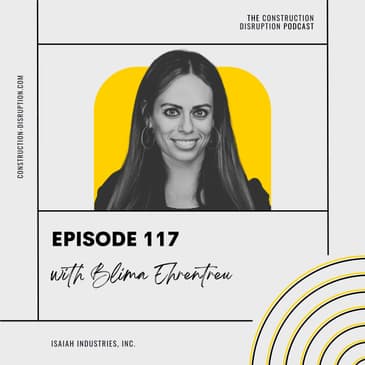
Uncover the unexpected impact of interior design on emotions with Blima Ehrentreu. Her inspiring journey, from watching her childhood home being rebuilt to revolutionizing interior design, will leave you in awe. Discover the surprising influence of nature on her design philosophy and how she's leveraging AR (augmented reality) and VR (virtual reality) to create immersive experiences. Tune in to this episode of Construction Disruption to learn more about Blima's game-changing approach to interior design and her secrets to success.
In this episode, we discuss:
· How interior design can positively influence emotions and create uplifting spaces.
· How to design spaces with clear purpose and intention, making every element count.
· Explore the exciting trends and possibilities of using virtual reality in interior design.
· Common challenges faced in interior design projects and applying practical solutions.
· The potential of leveraging AI to enhance and streamline the creative design process.
Today, our guest is Blima Ehrentreu, the visionary founder, CEO, and principal interior designer of The Designers Group. With offices in New York, Toronto, and Miami, her firm is revolutionizing interior design standards. Blima's journey into the world of construction and interior design began with the rebuilding of her childhood home, igniting a passion that has driven her to create purposeful and innovative design solutions. Her unique approach and dedication make her an invaluable guest, offering insights and inspiration for aspiring interior designers and architects seeking to make a meaningful impact through innovative design solutions.
Visit the Designers Group website at thedesignersgroup.com to learn more about their interior design services and projects.
Connect with the Designers Group on social media:
For more Construction Disruption, listen on Apple Podcasts or YouTube
Connect with us on Facebook, Instagram, or LinkedIn
This episode was produced by Isaiah Industries, Inc.
This podcast uses the following third-party services for analysis:
Podtrac - https://analytics.podtrac.com/privacy-policy-gdrp
Welcome to the Construction Disruption
Speaker:podcast, where we uncover the future of
Speaker:design, building, and remodeling. I'm Ryan
Speaker:Bell of Isaiah Industries, a manufacturer
Speaker:of specialty metal roofing and other
Speaker:building materials. And today, my co host
Speaker:is Ethan Young. Ethan, how you doing
Speaker:today? Doing pretty good, Ryan. Finishing
Speaker:up on a Friday here. We recorded an
Speaker:episode earlier today, so this will be
Speaker:episode two for our season two year of
Speaker:construction disruption. But looking
Speaker:forward to it. How you doing? I'm doing
Speaker:well. I have a pretty serious question for
Speaker:you. To kick things off this episode, I
Speaker:was looking through some of the older
Speaker:episodes we recorded, and I forgot about
Speaker:the nice beard you used to have. What are
Speaker:the chances that that's coming back
Speaker:sometime soon? Pretty low. Pretty low. I
Speaker:did like growing it out, but it takes such
Speaker:a long time. It's a commitment. But sorry
Speaker:I had to ask. I forgot about it
Speaker:completely. Well, let's get started.
Speaker:Something we kind of joke around about
Speaker:here a little bit as a roofing
Speaker:manufacturer, is that homeowners will
Speaker:often pay for extra things inside their
Speaker:homes and buildings. Things that they can
Speaker:touch and feel. But oftentimes they just
Speaker:want to get by with the roof and choose
Speaker:something basic rather than something
Speaker:special. Well, today we're going to dig
Speaker:into the inside of the buildings that we
Speaker:live and work in and visit. Why do those
Speaker:interiors have such meaning and emotion
Speaker:and value to us? To help us along that
Speaker:way, we're pleased to have Blima Aaron
Speaker:Troy as our spotlighted guest. Blema is
Speaker:the founder, CEO, and principal interior
Speaker:designer of the designers group. With
Speaker:offices in New York, Toronto and Miami,
Speaker:the designers group is truly setting a new
Speaker:standard in interior design. Blima,
Speaker:welcome to construction Disruption. It's a
Speaker:pleasure to have you as our guest today.
Speaker:Thank you. So happy to be here. Well, we
Speaker:love it when our guests tell us their own
Speaker:stories, so we're going to ask you to do
Speaker:that. What created your interest in design
Speaker:and brought you to where you are today
Speaker:with your own firm? Back when I was in
Speaker:high school, my parents moved us across
Speaker:the street from my childhood home, and we
Speaker:had the opportunity to watch the entire
Speaker:home get rebuilt. So starting from
Speaker:demolition to laying the foundation,
Speaker:watching walls go up and really seeing the
Speaker:floor plans come to life was what really
Speaker:sparked my interest in construction and
Speaker:interior design. And I remember that my
Speaker:mom had worked with an interior designer,
Speaker:and that was something that really
Speaker:fascinated me, seeing how choosing a color
Speaker:from a fan deck really was executed in the
Speaker:entire room being that color. So it was
Speaker:that experience that really put me in the
Speaker:direction of wanting to pursue a career in
Speaker:the construction and interior design
Speaker:industries. Let's talk about the
Speaker:connection between people and the interior
Speaker:of buildings. We mentioned earlier how
Speaker:this seems to be something people can be
Speaker:very emotional about. Can you reflect on
Speaker:that a bit, on the connection between
Speaker:people and the interior of buildings where
Speaker:they live, work, eat, play, all those
Speaker:things? As a designer, I always talk about
Speaker:how people in spaces and in environments
Speaker:don't even fully realize the impact of
Speaker:what's around them. And I believe that
Speaker:where we really add value is giving people
Speaker:that experience where the space really
Speaker:talks to them and really helps them get to
Speaker:wherever they're supposed to be within
Speaker:that space. So, for example, when we're
Speaker:talking about a rehabilitation facility,
Speaker:we want that environment to promote
Speaker:getting better, getting healthier, wanting
Speaker:to get better. So those are all aspects
Speaker:that we consider when we're designing how
Speaker:to appeal to the psychological aspect of a
Speaker:person through the design elements to
Speaker:promote those activities. Now, today, for
Speaker:example, we actually were exhibiting at a
Speaker:school expo, and we were talking to
Speaker:different vendors and different people in
Speaker:the industry about how important it is for
Speaker:children to be in an environment in school
Speaker:that really promotes healthy thinking,
Speaker:that enables them to be productive, that
Speaker:allows their educational journey to be
Speaker:where it should be. And as designers, we
Speaker:believe that the environments of schools
Speaker:and really anywhere that children are,
Speaker:have such an impact on that experience and
Speaker:on promoting a good childhood and a good
Speaker:educational journey. So there definitely
Speaker:is that synergy between the space and
Speaker:between the people within it. I like what
Speaker:you said there at the beginning, kind of
Speaker:about how maybe we're just not aware of
Speaker:it. There's a book called the. I think
Speaker:it's called the design of everyday things.
Speaker:Have you ever read that or seen it? Not,
Speaker:but I will put it on my reading list, for
Speaker:sure. I've only read about half of it, and
Speaker:then I kind of put it down. But it was
Speaker:good from what I remember. And it's just
Speaker:about every how everything around us is
Speaker:designed and ultimately has an impact on
Speaker:our lives, whether we know it or not. Most
Speaker:of it is unnoticed, for sure. And I say
Speaker:it's not even just the way a space looks,
Speaker:but it's also the way you feel within the
Speaker:space. And, for example, what comes to
Speaker:mind is when we're working on hospitality
Speaker:space with a food component, then if
Speaker:people can't hear each other talk or if
Speaker:they can't see the food they're eating,
Speaker:that all impacts the way they're
Speaker:experiencing the space. So it's not just
Speaker:what you see, it's also making sure that
Speaker:all five senses are engaged and that we're
Speaker:making sure that they can be engaged in
Speaker:the right way. I was going to say, this
Speaker:made me think of, like, color theory and
Speaker:the way, you know, people respond
Speaker:differently to different colors,
Speaker:especially in like a, you know, design
Speaker:situation like this or. Yeah, I think,
Speaker:yeah, I think you were dead on with that.
Speaker:We don't even realize how many little
Speaker:things add up to, you know, whether it's
Speaker:like the lighting or whatever it is that
Speaker:just affects how we feel in a room or in a
Speaker:building. So I definitely think it's a. It
Speaker:has a major effect on us, more than we
Speaker:realize, for sure. And as designers, we
Speaker:have the ability to direct how things will
Speaker:work in a space, but we want to make sure
Speaker:that all five senses will be engaged and
Speaker:that people don't even think about it. We
Speaker:don't want it to be something that you
Speaker:really have to notice. It should be
Speaker:natural. So what sort of experience does
Speaker:the designers group give to its clients
Speaker:compared to maybe, perhaps the experience
Speaker:they might expect in working with an
Speaker:interior designer? Is there something
Speaker:special or unique about your interaction
Speaker:with them? We're all about the impact that
Speaker:our designs will have on the spaces that
Speaker:we work on. So we really come in from a
Speaker:holistic perspective where we want
Speaker:everything to work together. And like I
Speaker:spoke about before, engaging all five
Speaker:senses, making sure, even from a branding
Speaker:perspective, that before people even step
Speaker:into the space, there is that same
Speaker:experience, whether they're looking at the
Speaker:social media, whether they're looking at a
Speaker:website or whatever it may be. But we're
Speaker:very much into the branding and the
Speaker:mission and vision of a company of a
Speaker:particular space, whatever it is. And what
Speaker:comes to mind when we're talking about
Speaker:this is over. COVID we were working on a
Speaker:string of urgent cares and we actually got
Speaker:involved in the branding of the urgent
Speaker:care brand. It was a new company and we
Speaker:worked on what color direction they would
Speaker:go with their logo and how to implement
Speaker:and incorporate those elements into not
Speaker:only the space, but the prescription pads
Speaker:and the doctor's uniforms and any of their
Speaker:social media, so that when people were
Speaker:looking up this medical practice, it would
Speaker:all feel familiar to them, even before
Speaker:stepping into the door. And once they were
Speaker:there, that experience would just all come
Speaker:together. And not just that, but we did
Speaker:approach the design of the space from a
Speaker:hospitality perspective, where when you
Speaker:get a facial or a massage, that's a luxury
Speaker:experience. And when you're getting
Speaker:stitches or a struck culture, that's an
Speaker:anxiety ridden experience. And I remember
Speaker:the grand opening of the first location,
Speaker:and I heard someone saying to another
Speaker:person, hey, I feel like I'm in a spa. And
Speaker:I literally walked over to him and said,
Speaker:did someone tell you to say that? Because
Speaker:this was our mission, and that's what's so
Speaker:important as designers, that the vision of
Speaker:whatever the space may be is executed from
Speaker:the initial concept all the way to
Speaker:completion. So we see this. Whether it's a
Speaker:multifamily property where people want a
Speaker:community or it's a medical facility or a
Speaker:school or an event space or a restaurant,
Speaker:the same principles can be applied
Speaker:throughout. So you work on a lot of
Speaker:different types of buildings, obviously.
Speaker:Do you approach when you're getting
Speaker:started on the project, or do you kind of
Speaker:have the same approach to them, or do you
Speaker:tackle each one kind of based on what it
Speaker:is? We do have the same approach in terms
Speaker:of our process. There is that initial
Speaker:onboarding meeting where we discuss what
Speaker:the client is trying to achieve, and then
Speaker:there is no one size fits all approach. So
Speaker:sometimes people call us up and they're
Speaker:like, oh, how much do you charge for so
Speaker:and so? And we say to them, it's not like
Speaker:something you could walk into a store and
Speaker:just buy. So there isn't a set price. We
Speaker:have to look at what kind of space it is,
Speaker:how the space will be utilized, what
Speaker:square footage we're talking about.
Speaker:There's so much that goes into even coming
Speaker:up with the pricing for an interior design
Speaker:project. And then once we get into the
Speaker:specifics of that project, it's really
Speaker:about doing the research, understanding
Speaker:what we're trying to achieve with this
Speaker:space. So, for example, in office, when we
Speaker:look at an office project, we're not just
Speaker:looking at the employees and the staff,
Speaker:which that's definitely a key part. We
Speaker:want people to be happy and fulfilled and
Speaker:productive in a space that they work in.
Speaker:But we also want that if prospective
Speaker:clients are walking in, the mission of the
Speaker:company is there, and people can actually
Speaker:appreciate what kind of office they're
Speaker:walking into. So we're always looking at
Speaker:any space from so many different angles
Speaker:and making sure that the design that we
Speaker:come up with will address all of that. Can
Speaker:you tell us a bit about a project that
Speaker:you've been involved with in recent years
Speaker:where you found that your firm ended up
Speaker:with a very different result from what
Speaker:others may have ended up with? I believe
Speaker:that my team is incredibly talented. In
Speaker:every project that we approach, we're
Speaker:innovative, we look at it differently, and
Speaker:we come up with unique solutions. But I
Speaker:will say a project that we're currently
Speaker:working on now is a special needs center,
Speaker:and it's for adults with disabilities. And
Speaker:we are so grateful for that opportunity
Speaker:because we're learning so much from it.
Speaker:We're not specifically, we don't have
Speaker:specific experience in this space. We've
Speaker:worked on a lot of schools, we've worked
Speaker:on medical facilities, and we worked on a
Speaker:lot of components of what the center will
Speaker:address. For example, there's a pool
Speaker:there. They have a dental office for
Speaker:special needs patients. They have therapy
Speaker:spaces. They have day hab. We have areas,
Speaker:gyms. So all of that we have experienced.
Speaker:But we were working on the autistic unit,
Speaker:and none of the walls can be, can have
Speaker:sharp points because this could be
Speaker:dangerous for them. So all the walls have
Speaker:padding, there's curved edges to any
Speaker:corners. And that was something so
Speaker:interesting for me, because in every space
Speaker:that we work on, we learn so much, not
Speaker:even necessarily that the outcome was
Speaker:different than another design firm. But
Speaker:for us, it's so interesting to be in all
Speaker:these different industries and being able
Speaker:to apply what we're learning from one
Speaker:industry into another. Obviously, we have
Speaker:experts and designers with experience who
Speaker:are part of the team. But for me, as the
Speaker:CEO, I get to learn parts of all the
Speaker:different industries. And it's so
Speaker:interesting, and it's so, so amazing, all
Speaker:the solutions that we're able to come up
Speaker:with because of that. So I think you often
Speaker:talk about designing with purpose, and
Speaker:maybe this leads well right into this
Speaker:question, but what does that mean to you,
Speaker:and what impact does it have on your final
Speaker:product? My team and I are always
Speaker:approaching a project from the perspective
Speaker:of how can we improve people's lives, make
Speaker:their quality of life better? How can we
Speaker:help them accomplish their goals and what
Speaker:they're setting out to do within the
Speaker:space? And our motto really is designing
Speaker:with purpose, creating a better world. And
Speaker:we believe that the environments that
Speaker:people are in because they have such an
Speaker:impact on the way they interact within the
Speaker:space and what they can accomplish in the
Speaker:space, that we believe that we're really
Speaker:making the world a better place. And we
Speaker:use that as the platform for our firm,
Speaker:being involved in so many nonprofits and
Speaker:charitable initiatives, because it really
Speaker:is all about making the world a better
Speaker:place. And I know I speak for myself as
Speaker:well as my team, that we feel so lucky and
Speaker:so fortunate that our career has that kind
Speaker:of impact. And that's why we take it a
Speaker:step further as well, to really try to
Speaker:empower future designers with mentoring
Speaker:and the ability to come to our office and
Speaker:experience design, as well as the TDG
Speaker:furniture exchange, where we help people
Speaker:who need furniture match them with people,
Speaker:our furniture, to give away. So that's a
Speaker:sustainable approach, as well as a way of
Speaker:giving everyone a beautiful home and a
Speaker:place to call their own that they're so
Speaker:happy with. So, you know, everything that
Speaker:we're doing kind of stems from that same
Speaker:principle of we want to make the world a
Speaker:better place. Very cool. So you talked
Speaker:about, you know, designing with purpose
Speaker:and making the world a better place. Do
Speaker:you think that the, you know, every job
Speaker:the designers group does, you think
Speaker:there's sort of like a signature touch to
Speaker:it? Is there, you know, sort of some kind
Speaker:of common thread that people would notice
Speaker:when they walk in one of your buildings?
Speaker:That's a good question, because we're a
Speaker:very diverse team. We have designers from
Speaker:all over the world, from many different
Speaker:cultures, different religions, different
Speaker:educational backgrounds besides their
Speaker:design degree. Everyone has gone to design
Speaker:school, but we see that everyone's shared
Speaker:and unique experiences are what gives the
Speaker:design its innovative approach. However,
Speaker:there is that unique thread that we always
Speaker:make sure that, for example, the lobbies
Speaker:of our projects are very welcoming or
Speaker:branded, but they look very different. But
Speaker:there is some sort of universal thread
Speaker:that you can see because, like I said,
Speaker:we're very detail oriented and we're very
Speaker:process driven. So we do have the same
Speaker:approach to all our projects, but it is a
Speaker:customized solution, so there's never a
Speaker:copy paste, and we're always coming up
Speaker:with new ideas. I travel a lot, and that's
Speaker:one of the ways that I stay inspired, and
Speaker:I'm always looking at the way different
Speaker:people live and the way different spaces
Speaker:work. Like, for example, I went on a
Speaker:cruise a couple years ago, and I was just
Speaker:looking at all the materials and how they
Speaker:put the spaces together because it has to
Speaker:be super durable. And there's that
Speaker:turnover of however many thousands of new
Speaker:people coming in every week. We're working
Speaker:on a lot of senior living facilities, and
Speaker:we need to make sure that those spaces are
Speaker:very durable because there's the heavy
Speaker:machinery going up and down the corridors
Speaker:there, as well as the wheelchairs and the
Speaker:walkers. So it's really looking at the way
Speaker:different spaces work and the way
Speaker:different countries with our different
Speaker:climates function and using those
Speaker:principles within the spaces that. We
Speaker:design, just kind of learning lessons
Speaker:along the way and applying them where, you
Speaker:know, where you see fit. Yeah. So never a
Speaker:boring day for us. So a big topic right
Speaker:now is AI. How do you see AI impacting
Speaker:design now? And, you know, maybe 510 years
Speaker:down. The road with any technology, it's
Speaker:always really hard to predict how fast
Speaker:things will move. But I definitely think
Speaker:that there is so much opportunity with AI,
Speaker:and as a firm, we're definitely leveraging
Speaker:AI where we can to simplify our processes.
Speaker:However, that being said, I do believe
Speaker:that because our spaces are so unique and
Speaker:they're all about the emotional and
Speaker:psychological impact that our designs can
Speaker:have, that it's not going to replace a
Speaker:designer or the human touch, but it
Speaker:definitely can help simplify those
Speaker:processes and make things easier. And also
Speaker:when it comes to the inspiration phase,
Speaker:when people sometimes get stuck, there's
Speaker:so much inspo now that can be had by using
Speaker:AI and leveraging its capabilities. We're
Speaker:definitely a fan of staying ahead of
Speaker:technology, incorporating it and
Speaker:implementing it where we can, and we see
Speaker:so much opportunity and potential with AI.
Speaker:I'm a graphic designer most of the time,
Speaker:but I certainly you had me fooled. I
Speaker:thought roofing. Well, I do graphic design
Speaker:for roofing products, our marketing
Speaker:materials and websites, but I've loved the
Speaker:introduction of AI into that process and
Speaker:how quickly I can sometimes get over that
Speaker:creative block. And Ethan's background is
Speaker:in writing. He's our content writer. I
Speaker:don't know how much you've played around
Speaker:with the writing side of it too, but
Speaker:that's a struggle for me, always coming up
Speaker:with the words. I welcome the AI and I
Speaker:agree. I think it really is just another
Speaker:tool for us to use that can help us be
Speaker:more efficient and work better and
Speaker:potentially even come up with different
Speaker:ideas and solutions that we normally want
Speaker:to. So I look forward. It scares me a
Speaker:little bit how fast it's moving, though.
Speaker:That's the only thing that scares me about
Speaker:it. Yeah, but even with the writing, I've
Speaker:experimented with chat, GPT, I find that
Speaker:there is that back and forth, and I find
Speaker:it to be the same with design. Ryan, maybe
Speaker:you can talk to the graphic side of it,
Speaker:but it's very hard to get it to where we
Speaker:need it to be at this point. I do believe
Speaker:we will be able to, but right now we
Speaker:definitely have that back and forth of
Speaker:refining it and refining it some more,
Speaker:which is why I believe that we'll always
Speaker:need the human touch. Yeah, I definitely
Speaker:agree. I think there's just too many like,
Speaker:whatever the situation is, especially with
Speaker:writing, but with a lot of different
Speaker:things too. Designed to. There's just too
Speaker:many idiosyncrasies with humanity. Like,
Speaker:we just have these little, like, you know,
Speaker:moments in our life or stories we remember
Speaker:or references or anything like that that
Speaker:I'm sure AI will be able to learn a lot of
Speaker:that stuff, but it's never going to be
Speaker:able to totally replace that, at least for
Speaker:me personally. I'm sure for a lot of
Speaker:people in their efforts. Yeah. At this
Speaker:point, I thought we would have robots
Speaker:running the worlds already, so that's been
Speaker:taking flying cars at. That's what I want
Speaker:that, too. Okay, next question here. Are
Speaker:there any particular design trends or
Speaker:perhaps even some new products that you're
Speaker:excited about and kind of anxious to see
Speaker:where they could go? So, speaking to
Speaker:technology, we've really been
Speaker:experimenting with VR tours, which is
Speaker:building out the spaces in three D, and
Speaker:people can actually experience those
Speaker:spaces using our VR headsets. Like I said
Speaker:earlier, we were at an expo this morning,
Speaker:and we brought a couple of our headsets
Speaker:along with us, and people were able to
Speaker:experience a recent school that we
Speaker:designed. They were able to feel like they
Speaker:were walking through the space and really
Speaker:understand what our design vision is. And
Speaker:we found it to be such a powerful tool,
Speaker:getting clients on board, getting donors
Speaker:on board, getting the consultants that
Speaker:we're working with to visualize what we
Speaker:have in mind and what we've really found,
Speaker:how it's been, the most helpful is to
Speaker:people without any kind of design of
Speaker:background because they have a much harder
Speaker:time reading plans and understanding what
Speaker:our vision is. But when we're able to
Speaker:present it in this kind of way, where it's
Speaker:a fully immersive experience before the
Speaker:design is executed, before there has even
Speaker:been a shovel in the ground, there is just
Speaker:that much more of an understanding what
Speaker:our vision is, and we're able to get
Speaker:people on board much more quickly. That's
Speaker:really neat. And I do see so much
Speaker:potential there with the AR and VR side of
Speaker:things. It's really exciting to watch that
Speaker:and see where it's going to go. I think
Speaker:that's some pretty cool stuff there. I'm
Speaker:going to kind of trampoline back to when
Speaker:we were talking about inspiration. As an
Speaker:interior designer, where do you find your
Speaker:inspiration? Normally, I like to find
Speaker:inspiration wherever I am and wherever I
Speaker:go, so there's no specific time or place
Speaker:that I'll be looking for Inspo. But like I
Speaker:said, I love to travel. I find that
Speaker:there's so much in nature that's so
Speaker:inspiring. I mean, God is the ultimate
Speaker:artist. So when you look at earthquakes or
Speaker:volcanoes or a sunset and a sunrise, I
Speaker:mean, there's so much that I see every
Speaker:time there's something like that and just
Speaker:really being present wherever I am and
Speaker:learning from the people, the places, the
Speaker:things around me. Do you ever get
Speaker:overwhelmed or feel like inspiration could
Speaker:be overwhelming? Whenever anything really
Speaker:feels overwhelming, I always like to break
Speaker:it down. So if I'm in a space or in a
Speaker:place that's overstimulating, always try
Speaker:to not let myself get overstimulated and
Speaker:try to break it down. So typically it's
Speaker:not a problem for me. Do you find that you
Speaker:get overstimulated or overwhelmed in
Speaker:spaces? I don't know that I've ever really
Speaker:thought about it, to be honest. Maybe like
Speaker:Chuck E. Cheese or something like that. I
Speaker:see where you're heading. I don't think
Speaker:there's any space. Yeah. I don't know that
Speaker:I can think of any space other than noise
Speaker:that I would find overstimulating. I do
Speaker:believe that good design, everything works
Speaker:well together, and there isn't that one
Speaker:overwhelming, overstimulating detail.
Speaker:Great design is when everything works well
Speaker:together, and there could be that feature,
Speaker:for sure, but not that there's screaming
Speaker:aspects. That's how we like to look at it.
Speaker:Design, when it all organically and
Speaker:holistically works together. Yeah. More of
Speaker:a ice flowing breeze instead of a, you
Speaker:know, tornado whipping. Your. Whipping,
Speaker:your. Whipping you all over the place, I
Speaker:guess. A good, thoughtful approach that
Speaker:works that way. So what sort of culture do
Speaker:you try to foster at the designers group?
Speaker:You know, is there. Is there a certain
Speaker:culture that you kind of focus on and try
Speaker:to build that you feel really kind of
Speaker:supports your work and goals? As a
Speaker:company, we're all about collaboration and
Speaker:working together because we really believe
Speaker:that that's who you get the best result.
Speaker:And when everyone's voice is heard and
Speaker:everyone plays a part in what we're doing,
Speaker:you can't compare it to one person working
Speaker:on something or having two people. We
Speaker:believe that is exponentially more
Speaker:powerful. And we've really seen that when
Speaker:people work well together and everyone is
Speaker:about helping each other out, like, we
Speaker:have monthly goals and quarterly goals,
Speaker:and if people don't reach them because
Speaker:they're collaborating on another project,
Speaker:that's okay, because we understand that
Speaker:where they're collaborating is where we'll
Speaker:get a better result. So we really foster
Speaker:that kind of environment. And it's been
Speaker:incredible to see the progression of the
Speaker:designers on our team from when they start
Speaker:to where they all are today. It's an
Speaker:incredibly inspiring and collaborative
Speaker:environment, and everyone really wants to
Speaker:support each other. I have to ask, this
Speaker:made me think, since you guys design your
Speaker:buildings, what is your office space like?
Speaker:Is it also, like, you know, you talked a
Speaker:lot about collaboration stuff. Does that
Speaker:facilitate that for you? Very good
Speaker:question. So the design of our offices are
Speaker:really based on where they are and the
Speaker:space that we found. For example, our
Speaker:office in Brooklyn is kind of a loft space
Speaker:where we have these gigantic windows and a
Speaker:ton of natural light. And the building is
Speaker:actually a converted warehouse. So we were
Speaker:the designers on, you know, figuring out
Speaker:how to make the space really rentable and
Speaker:give as many different areas for amenities
Speaker:and for the client to really up the value
Speaker:of the building. And we. Our previous
Speaker:lease was up, and so we need a new space,
Speaker:and this office has incredible sunlight,
Speaker:and for us, that's key. And high ceilings.
Speaker:But as I was saying, there are what? There
Speaker:are exposed ducts, and we decided to take
Speaker:advantage of that. So our space is really
Speaker:that kind of industrial vibe, whereas
Speaker:another office space is much more clean,
Speaker:neutral colors. So it really depends on
Speaker:the area where it is and the space that we
Speaker:have, but really leveraging the space and
Speaker:the positive attributes of that space and
Speaker:working with it. That was a good question,
Speaker:Ethan. So now I have to ask, as a
Speaker:designer, and it's a little different,
Speaker:because I'm designing things that are on a
Speaker:screen or paper and can easily be changed.
Speaker:I always struggle with one knowing when
Speaker:something's done or being okay with it
Speaker:being done, but then if I look back at it,
Speaker:you know, even a week or a month later, I
Speaker:want to change it. Do you have that? Does
Speaker:that, like, obviously, there's been money
Speaker:involved with you updating your office
Speaker:constantly, but is that something you have
Speaker:to deal with as a designer? Like, oh,
Speaker:there's a new trend or something, or, I
Speaker:wish we would have done it this way. Is
Speaker:that something that ever crosses your
Speaker:mind? So, that's interesting that you're
Speaker:asking that, because I was on a call
Speaker:yesterday, and the client was asking about
Speaker:our timelines and how quickly we can
Speaker:deliver, and I said something like, when
Speaker:we work on a design, it's not that it's
Speaker:done after one try. There's one try, and
Speaker:then we refine it, and then we refine it
Speaker:again and then again till we get the final
Speaker:product. By the time we have something
Speaker:that we're happy with, we're happy with
Speaker:it, and we don't want to change it
Speaker:anymore. So I hear what you're saying when
Speaker:something new comes out and. But I always
Speaker:find that after working on a space for a
Speaker:long time, I get very used to it. And then
Speaker:if I will come visit it after however
Speaker:long, I'm like, oh, wow, this space is
Speaker:incredible. But after working on it every
Speaker:day for, let's say, a couple of years, I
Speaker:notice everything that didn't go right,
Speaker:and that's what I see. But taking a step
Speaker:back and visiting it a couple of years
Speaker:later, I'm always blown away by how
Speaker:amazing it looks and how well people are
Speaker:responding to it. That makes sense. Makes
Speaker:sense. So looking in, assuming you have a
Speaker:crystal ball and you can look into it,
Speaker:what does interior design look like in 20
Speaker:years from now? There are so many exciting
Speaker:opportunities that we're exploring, and
Speaker:there's so much innovation out there,
Speaker:especially when you're looking at the
Speaker:digital world, the virtual world, I
Speaker:believe that's going to be very big and
Speaker:just, we're all about the built
Speaker:environment, but we are exploring the
Speaker:virtual world and how we can have an
Speaker:impact there. It was interesting because I
Speaker:was flying from Miami to New York
Speaker:yesterday, and in the airport, in the
Speaker:lounge, I saw a guy sitting with a headset
Speaker:and a keyboard. I've never seen that
Speaker:before. When we're giving people the
Speaker:opportunity to tour our spaces in VR, we
Speaker:have the hands. Can't even remember what
Speaker:they're called. But the controllers. Yeah,
Speaker:the controllers, exactly. But here he
Speaker:seemed to be in some sort of office
Speaker:environment, writing out documents using
Speaker:the new Apple headset. And it was
Speaker:interesting for me to see. I was going to
Speaker:take a picture of it because I thought it
Speaker:was interesting. And then I realized he
Speaker:can't see that I'm taking the picture, and
Speaker:I probably shouldn't do that. But I was
Speaker:thinking, like, hey, this is what lounges
Speaker:are going to look like in the future.
Speaker:Everyone in their own world, but sitting
Speaker:together, which is such an interesting
Speaker:concept. And I do believe that as
Speaker:designers, we will be able to help bring
Speaker:people together in that space, and that's
Speaker:what we're all about, whether it's the
Speaker:amenities that we're designing or the
Speaker:different community centers and buildings.
Speaker:It's about really bringing people together
Speaker:and creating this better world for all of
Speaker:us together. So I'm excited to see where
Speaker:all this takes us. But definitely 20 years
Speaker:from now, things will be looking very
Speaker:different than they are today. So I was on
Speaker:a meeting with a guy a couple weeks ago,
Speaker:right after the Apple vision pros came out
Speaker:and he had gotten them, and he looked like
Speaker:a ghost on the zoom call. And I said, so I
Speaker:said, ken, you look like a ghost. Like,
Speaker:what camera are you using? Because he was
Speaker:kind of, like, transparent. He's like, oh,
Speaker:I just got the vision pros, and I'm trying
Speaker:them out. I don't have a camera or
Speaker:computer. They are creating my face,
Speaker:basically, and creating an avatar. And it
Speaker:looked like him. Just kind of ghostly. I
Speaker:don't know how to explain it a better way.
Speaker:It didn't really work very well. And he.
Speaker:That was kind of his feedback was, this
Speaker:technology's cool. There's potential here.
Speaker:It's not there yet. Yeah, but with
Speaker:construction in general, there's so many
Speaker:limitations when it comes to site
Speaker:conditions and budget, but in a virtual
Speaker:world, there's really none of that. So
Speaker:when you talk about overstimulating in a
Speaker:space, that's definitely something that
Speaker:could happen. Right now you're saying that
Speaker:this person was see through, or you could
Speaker:barely see him. But I could see a future
Speaker:where everyone's going to be a lot more
Speaker:than they really are in person. Be
Speaker:interesting. It's going to be an
Speaker:interesting next couple of years, I think,
Speaker:for sure. What advice would you have for
Speaker:any younger folks that are thinking about
Speaker:getting into a career in design? Any
Speaker:advice on kind of how they should go about
Speaker:pursuing that? I always say that the best
Speaker:way to pursue any career is really to go
Speaker:to school and get the correct foundation
Speaker:for it. So if it's school or if it's
Speaker:learning from someone, if there's no
Speaker:specific schooling, but there is the
Speaker:educational aspect, but then the actual
Speaker:experience aspect. And when it comes to
Speaker:design, people can get very afraid because
Speaker:a mistake can cost you, can cost you,
Speaker:whether in money or in safety issues, have
Speaker:to be redone. So I always say, never be
Speaker:afraid. Always believe in what you can do
Speaker:as a designer. Believe in your creative
Speaker:skills and your passion, and don't be
Speaker:afraid to make mistakes. But when you do
Speaker:make those mistakes, make sure to learn
Speaker:from them, because it's so important. And
Speaker:I always go back to this story. When I was
Speaker:starting out as a designer, we were
Speaker:working on a residential home, and we were
Speaker:very excited. The delivery for the living
Speaker:room furniture was coming, and the sofa
Speaker:arrived. We obviously had measured, made
Speaker:sure that everything will fit, and they
Speaker:couldn't get the sofa through the front
Speaker:door. We did not think of checking that.
Speaker:They tried going through the basement. It
Speaker:just would not fit through, so we had to
Speaker:send it back. We obviously took care of
Speaker:the restocking fee. So again, also very
Speaker:important, take responsibility for your
Speaker:mistakes, because at the end of the day,
Speaker:people are hiring you for your expertise.
Speaker:And now. So we basically, they replaced
Speaker:the sofa with one that could, you know,
Speaker:come apart and they were able to get it
Speaker:through the front door. But now, years
Speaker:later, we're working on an event space
Speaker:where we're doing these floor to ceiling
Speaker:partitions, and these are 18ft high
Speaker:partitions. And right away, the first
Speaker:question that I asked the lead designer
Speaker:is, how are we getting these partitions
Speaker:into the space? Because the elevators are
Speaker:not going to fit those partitions. So it's
Speaker:about learning from that mistake and
Speaker:making sure that that will never happen
Speaker:again. And that's really how I think that
Speaker:you learn either. Watching someone else,
Speaker:having a mentor, making mistakes which are
Speaker:not always fun, but don't be afraid to
Speaker:try. Take responsibility for those
Speaker:mistakes, but always make sure to learn
Speaker:from them. I think mistakes are the best
Speaker:way to learn and it's really hard,
Speaker:especially as a parent sometimes, to watch
Speaker:kids fail and just let them fail, knowing
Speaker:that they need to learn. But absolutely.
Speaker:Are there any influencers that yet these
Speaker:younger folks should be maybe following
Speaker:and paying attention to any that kind of
Speaker:stand out to you as a good potential
Speaker:mentor? I'm not so big on social media. I
Speaker:find that when I get go down that rabbit
Speaker:hole, I get nothing done, nothing
Speaker:productive, anyway. So I don't really have
Speaker:that many off the top of my head. But I
Speaker:would say everyone connects to different
Speaker:people and if there's someone that you
Speaker:like their style or you like their
Speaker:approach, then definitely try to follow
Speaker:them so you can learn from them. Good
Speaker:advice. Social media can be a dangerous
Speaker:environment. Lesson of the day. Not
Speaker:exactly what I said, but yes. Well, thank
Speaker:you so much, Blima. This has been great,
Speaker:great time together. We're close to
Speaker:wrapping up what we call the business end
Speaker:of things. Is there anything that we
Speaker:haven't covered today that you would like
Speaker:to share with our audience? I think you
Speaker:guys did great. Think of anything that you
Speaker:missed. All right, well, before we close
Speaker:out, I have to ask if you'd like to
Speaker:participate in our rapid fire questions.
Speaker:These are our seven questions that we will
Speaker:ask. Some are a little serious, some are a
Speaker:little silly. All you have to do is give a
Speaker:quick response to each question. Would you
Speaker:like to play? All right, let's do it. All
Speaker:right, Ethan, you want to go and ask the
Speaker:first question? Yeah, yeah, I can kick us
Speaker:off. All right. If you had to pick one
Speaker:person to go with you when you're trying
Speaker:to survive a zombie apocalypse. Who would
Speaker:that one person be? Anyone in the world.
Speaker:Elon Musk. Yeah, we get that one a lot. A
Speaker:lot of people think, you know, he's got
Speaker:all those finances, the resources he can
Speaker:keep him alive. I believe it's the way his
Speaker:brain works. But again, it might not even
Speaker:be him. It might be the people that he has
Speaker:in his orbit, so. But he definitely has
Speaker:come up with a lot of innovative ideas of
Speaker:how to do things. So question number two.
Speaker:What's your preferred seat on an airplane?
Speaker:All the way in the front. First class, if
Speaker:possible. All right, question three. This
Speaker:is always an interesting one. What would
Speaker:you most like to be remembered for? The
Speaker:impact that my designs, as well as my
Speaker:leadership, has had on the people that I
Speaker:work and interact with. Gotcha. Very
Speaker:admirable. Yeah. All right, question
Speaker:number four. What's something that amazes
Speaker:you? So many things. But I would say the
Speaker:impact that design has on the people in
Speaker:those spaces, I really, every time I see
Speaker:it, the transformative power of a space
Speaker:that we're in, I'm consistently amazed.
Speaker:All right, question five. Now, I really
Speaker:like this one, too. If you were a
Speaker:wrestler, what would your entrance song be
Speaker:like? What would the song be planned when
Speaker:you walk out to the ring? I think I would
Speaker:just go with classical music. Just keep
Speaker:everyone's expectations low, because I
Speaker:probably will be losing that match. You've
Speaker:already lost it in your mind. Yeah. Gotta
Speaker:believe in yourself a little more. Not
Speaker:when it comes to wrestling and everything
Speaker:else. Yes, I agree. Yeah. You gotta know
Speaker:your strength and your weaknesses. True.
Speaker:Very true. Oh, good point. Good point.
Speaker:Good point. All right, next question. If
Speaker:you had to delete all but three apps from
Speaker:your phone, which ones would you keep? The
Speaker:calling option? WhatsApp, for sure. And
Speaker:safari. Yeah, there you go. Pretty well
Speaker:rounded. Keep it. Keep you pretty well
Speaker:covered with those three, I think. Last
Speaker:one. Question seven. What is the best
Speaker:advice you've ever gotten? Follow your
Speaker:heart. That goes in your personal life as
Speaker:well as your career. If you put your heart
Speaker:and soul into whatever it is that you're
Speaker:pursuing, you'll have the best results.
Speaker:And I've really found that to be the case
Speaker:for me, for sure. Nice. Yeah. Well, good.
Speaker:Good answers. We will put this in the show
Speaker:notes, but thank you again for your time
Speaker:here. How can anybody that wants to get in
Speaker:touch with you or have any questions for
Speaker:you? What's the best way for them to.
Speaker:Reach out so they can always just go to
Speaker:our website, the designersgroup.com. And
Speaker:our handle on all social media platforms
Speaker:is also the designers group. Easy enough.
Speaker:We will put that in the show notes. Well,
Speaker:thank you again. This was a great episode.
Speaker:We need to recap our challenge words. I
Speaker:believe we were all successful. Kind of
Speaker:all snuck them in there right about the
Speaker:middle of the episode. Blima, your word
Speaker:was stuck in volcano. Just for good
Speaker:measure. Yeah, that was a good little.
Speaker:Yeah, mine was tornado. My challenge word
Speaker:was trampolines. So we were all successful
Speaker:in getting those in. Again, thank you so
Speaker:much, Blima, for your time here. We
Speaker:appreciate it. And just thank you for the
Speaker:insights you're willing to share with our
Speaker:audience. Thank you for having me. This
Speaker:was so much fun. I do not believe you guys
Speaker:are rusty at all. I'm curious to see you
Speaker:at the top of your game. Well, thank you.
Speaker:Maybe we're just a little harder on
Speaker:ourselves than we need to be. Yeah, it was
Speaker:a lot of fun, and I'm looking forward to
Speaker:staying in touch. Thank you so much for
Speaker:tuning into this very special episode of
Speaker:construction Disruption with Blima Aaron
Speaker:Troy of the Designers group. Please watch
Speaker:for future episodes of our podcast. We are
Speaker:always blessed with great guests. Don't
Speaker:forget to leave a review on Apple Podcasts
Speaker:or YouTube till the next time we're
Speaker:together. Keep on disrupting and
Speaker:challenging those in your world to better
Speaker:ways of doing things. And don't forget to
Speaker:have a positive impact on everyone you
Speaker:encounter. Make them smile and encourage
Speaker:them. Two simple yet powerful things we
Speaker:can all do to change the world. God bless
Speaker:and take care. This is Isaiah Industries
Speaker:signing off until the next episode of
Speaker:construction Disruption. This podcast is
Speaker:produced by Isaiah Industries,
Speaker:manufacturer of specialty metal roofing