
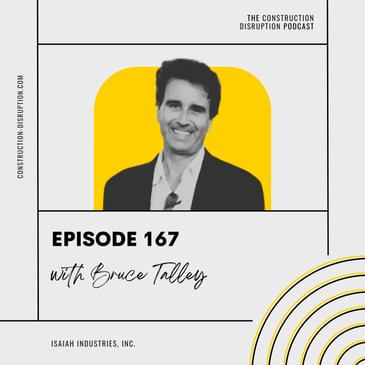
Join Todd Miller of Isaiah Industries and co-host Ryan Bell in this episode of Construction Disruption as they speak with Bruce Talley, CEO of Destination Ukraine. Discover the incredible story of resilience and opportunity in Ukraine amidst the ongoing reconstruction efforts. Bruce shares his adventurous journey from American capital markets to building businesses in Russia, and now leading the charge in Ukraine's recovery. Learn about the urgent building needs, opportunities for American companies, and how to get involved in the reconstruction efforts. This episode is packed with insightful anecdotes, practical advice, and a call to action for construction and building material stakeholders. Tune in for a fascinating discussion on the future of construction in Ukraine.
Timestamps
00:00 Introduction and Welcome
00:23 A Story from the Early Nineties
02:36 Introducing Bruce Talley
04:18 Bruce's Early Years and Russian Ventures
13:57 Challenges and Opportunities in Ukraine
22:10 The Role of American Companies in Ukraine
23:27 Opportunities for American Contractors
24:10 Challenges and Support for Ukraine
25:43 Upcoming Conferences and Networking
26:29 Assistance for Businesses Entering Ukraine
27:35 American Presence and Government Policy
29:04 Comparing Ukraine and Russia
31:14 Ukraine's Economic Potential
33:25 Encouragement for American Companies
35:46 Rapid Fire Questions
41:44 Conclusion and Contact Information
Connect with Bruce Online
LinkedIn: https://www.linkedin.com/in/bruce-talley-b78a5611/
Email: talley.br@gmail.com
KyivBuild Ukraine: https://kyivbuild.com.ua/en
Rebuild Ukraine: https://rebuildukraine.in.ua/en
For more Construction Disruption, listen on Apple Podcasts or YouTube
Connect with us on Facebook, Instagram, or LinkedIn
This episode was produced by Isaiah Industries, Inc.
Construction Disruption was recently featured in this 15 Best Podcasts for Contractors list!
This podcast uses the following third-party services for analysis:
Podtrac - https://analytics.podtrac.com/privacy-policy-gdrp
I'm Todd Miller of Isaiah Industries, manufacturer of specialty, residential
Speaker:and other use metal roofing.
Speaker:Welcome to Construction Disruption, the show where we break ground on new
Speaker:ideas and happenings in the worlds of construction and remodeling.
Speaker:Today I'm joined by co-host Ryan Bell.
Speaker:What's up, Ryan?
Speaker:Hey, Todd, not much.
Speaker:How are you doing?
Speaker:I am doing well.
Speaker:Um, got an interesting story to share.
Speaker:So, um, this goes back to the early nineties when you would've
Speaker:been probably a tweener, I guess, is that what they call 'em?
Speaker:Tweens.
Speaker:Okay.
Speaker:Um.
Speaker:So there was a news story back then and, and I admit this sounds like it's
Speaker:a setup for one of my stupid jokes.
Speaker:It is not.
Speaker:This is legit.
Speaker:But anyway, um, there was a news story back then of an escaped convict, I
Speaker:think it was in the Carolinas, who.
Speaker:Ended up breaking in through the roof of a Toys R Us store.
Speaker:Uh, for those of us who remember Toys R Us and he lived up above the store,
Speaker:um, for like six months, maybe longer.
Speaker:Um, of course this was before security cameras were all over and,
Speaker:you know, at night he would come down into the store and mess around
Speaker:and stuff and find food and then go back up sleeping above the ceiling.
Speaker:Um, so it's an interesting story, but, um.
Speaker:Of course Toys R Us was a national account of ours back then.
Speaker:Anyone that remembers the old Toys R Us Design, which had the Brown Metal Shingle
Speaker:Mansards out front, that was our product.
Speaker:Um, so they're, they've recently released and made a movie about this
Speaker:guy, uh, that they call Roof Man.
Speaker:Um, because he lived up in the roof and, uh.
Speaker:Just hitting theaters.
Speaker:It has Channing Tatum and Kirsten Dunst and Peter Dinkle in it.
Speaker:So it's got some big names in it.
Speaker:way.
Speaker:yeah, it does.
Speaker:So, so I was kind of excited.
Speaker:So I, I thought, well, that'd be really cool if they've got the store design,
Speaker:you know, with our old shingles on it.
Speaker:Yeah.
Speaker:Fortunately, it was right in the early nineties when Toys us started to play
Speaker:around with another store design.
Speaker:So the store that's in the movies, um, in the movie does
Speaker:not have our shingles on it.
Speaker:But anyway, it's, it looks like a cool movie.
Speaker:I encourage, it looks funny.
Speaker:Um, encourage everyone to Roof Man.
Speaker:Roof man.
Speaker:Just that's simple, right?
Speaker:First I. I thought with me it was about me, but that didn't work out that way.
Speaker:But anyway, so, um, that's my advice.
Speaker:Go see roof man and uh, but you're not gonna see brown shingles on
Speaker:the toys or us, unfortunately.
Speaker:Hey, are you good to go?
Speaker:Should we drive forward?
Speaker:Yeah, so let's get started.
Speaker:Awesome.
Speaker:Well, today on Construction Disruption, I'm pleased to say that we're joined
Speaker:by Bruce Talley, CEO of destination Ukraine, uh, with a degree in economics.
Speaker:Bruce worked in American capital markets, selling bond issues to individuals and
Speaker:loan participation to commercial banks with lifetime sales of over $2 billion.
Speaker:He led west Coast sales for his firm.
Speaker:Later.
Speaker:Bruce bought and sold commercial land in Southern Russia for
Speaker:his and his partner's accounts.
Speaker:While living in Sochi Russia, he started and built a destination management
Speaker:company that became the largest in Russia since February of 2022, though Bruce
Speaker:has been engaged in Ukraine's recovery.
Speaker:He started a destination management firm for companies shifting operations,
Speaker:and quickly saw the opportunities in residential ownership due to
Speaker:the war, due to population shifts and undervalued apartments in such
Speaker:cities as Kiev, Aviv, and Odessa.
Speaker:Um, as I mentioned earlier, Bruce is currently CEO of Destination
Speaker:Ukraine, and he is also co-founder of the Ukraine Prime Property Fund.
Speaker:As he looks at the reconstruction of Ukraine, he feels very strongly that
Speaker:US and European manufacturers and other companies really need to lead the way.
Speaker:Bruce, welcome to Construction Disruption.
Speaker:Looking forward to talking to you.
Speaker:Thanks a lot for having me.
Speaker:It's a pleasure to be here.
Speaker:Well, I know it's a great story that you have and I just think
Speaker:things like these that are going to be such an impact in terms of
Speaker:construction and development going on.
Speaker:Um, going to have lots of opportunities for US companies, so
Speaker:that's why we wanted to explore it.
Speaker:So tell me a little bit about your early years and what led you to living in Russia
Speaker:For what, like 10 years or something?
Speaker:about 10 years.
Speaker:Well, you know, I'm afflicted by this thing called curiosity.
Speaker:Good for you.
Speaker:Yeah, and well, I, as you mentioned, I worked in American capital markets.
Speaker:I worked for a company that specialized in, uh, underwriting and
Speaker:selling bond issues in California.
Speaker:It was, it's huge, uh, market obviously.
Speaker:uh, we also did loan participations for standard commercial projects like hotels
Speaker:and office buildings and condo projects, and especially Native American casinos.
Speaker:We were probably the leading lender, although a non-bank lender, so we.
Speaker:Participated all the loans out.
Speaker:So I, I sold a lot of those loans for the Native American casinos
Speaker:and, and, uh, but later I, you know, I was really interested.
Speaker:I did a lot of traveling for fun and I'd read a lot of.
Speaker:Russian and Soviet history and Russian literature.
Speaker:Don't ask me why.
Speaker:It just was a kind of a, a passion or strong interest of mine.
Speaker:And I guess probably because my folks read a lot and, um, so I went to Russia
Speaker:outta curiosity and I, I kept going back, you know, uh, and gradually I,
Speaker:began to have this, uh, germ of an idea that Russia was going to develop.
Speaker:The rule of law.
Speaker:Now, don't laugh too hard at me here because I, I feel naivete is showing, but
Speaker:I, I thought that Russia was going to.
Speaker:Develop and democratize and, and, you know, develop a, an economy
Speaker:in a stable form of government that respected human rights.
Speaker:Yeah.
Speaker:I thought it was gonna turn into something like a great big Czech
Speaker:Republic, which I think is kind of a model for, you know, post-Soviet economies.
Speaker:And so I went over there and, and, um, I way led onto way and I wound up in,
Speaker:in Crescent Region, Crescent Cry, which is on the east side of the Black Sea.
Speaker:And, uh, eventually I started buying and selling commercial land.
Speaker:I thought that cry, which has much better.
Speaker:Than you typically associate with Russia in the wintertime.
Speaker:You know, it's maybe is maybe something like North Carolina.
Speaker:so it's not so cold.
Speaker:Right.
Speaker:And, um, the summers are quite pleasant on the Black Sea.
Speaker:So I thought that the Black Sea region was going to experience some
Speaker:of the kind of development boom and demographic shifts that, know,
Speaker:California, for example, has experienced.
Speaker:So that's, that's how I wound up down there.
Speaker:Yeah.
Speaker:You know, it's real educational process and I oftentimes think about the.
Speaker:Dunning Kruger, uh, effect.
Speaker:And I think that in the beginning I was probably living at the very
Speaker:peak where I assumed my knowledge base was much greater than it is.
Speaker:But um, I always try to learn, um, know, I, I. Ukraine and Russia
Speaker:have, they're different countries.
Speaker:Russia has no right to be invading, but they have similar and, and legal systems.
Speaker:So, um, I think that, uh, you know, I go in with a healthy respect for
Speaker:what I, both what I know and what I don't know, and I always try to learn.
Speaker:but I do see, um, lot of opportunity in Ukraine coming up.
Speaker:I'm, I'm kind of curious back to owning and running businesses in
Speaker:Russia, and I'm right there with you.
Speaker:I remember that period when we thought that, you know, Russia would
Speaker:end up being a workable society and culture, but, um, being over there
Speaker:as an American doing things sounds a little cloak and dagger to me.
Speaker:Uh, I'm just curious, any real interesting stories or insights from those times?
Speaker:Well, yeah, I, um, know, I was, I was living in and I was, uh.
Speaker:spending time in this, uh, breakaway, uh, republic that separated.
Speaker:There was an ethnic conflict in a place called Apia in the early 1990s, and.
Speaker:Uh, the Georgians actually attacked Acaia, which was formally a
Speaker:part of the Republic of Georgia.
Speaker:And then, you know, eventually they were expelled and, you know, there's
Speaker:charges of ethnic cleansing on both sides as kind of a, a nasty history.
Speaker:But I thought that Acaia should develop maybe in the way that
Speaker:Montenegro or one of these.
Speaker:Places that former Yugoslavia would.
Speaker:It's a beautiful place, but it existed in isolation for a real long time.
Speaker:So I was in and out of there quite a bit.
Speaker:And then I was also lived in Sochi for four.
Speaker:you know, almost five years.
Speaker:So, um, those two experiences, I was the only American going
Speaker:in and out of, out of Apia.
Speaker:Um, I was seeking to help them on privatization of state owned resorts.
Speaker:I didn't wanna get involved in, you know, people who'd abandoned their
Speaker:property or anything like that, but that put me on the radar screen of
Speaker:the Ministry of Foreign Affairs.
Speaker:At least that's who they said they were, but really it was the FSB.
Speaker:So, yeah, I spent.
Speaker:Of the almost 10 years I spent there, I spent at least five under near
Speaker:continent constant scrutiny of the FSB.
Speaker:would, you know, they would pull me in and talk to me and R-U-C-I-A and so forth.
Speaker:For your listeners that are historically minded.
Speaker:My very first episode actually was I had, uh, you had to, uh, register
Speaker:your documents with the authorities anytime you went to a different city.
Speaker:And there were that the laws in Russia are written in conflict with each other, and
Speaker:I've never really understood Was that on purpose or is it just kind of sloppiness?
Speaker:So it's very difficult to be in compliance with a law because you, you might be
Speaker:complying with one law and not complying.
Speaker:As a result with another, anyway, I had to register my documents and the
Speaker:local authorities in this smaller city, which I lived in before I lived in.
Speaker:So called kin, they were causing me some issues with registration.
Speaker:They put violations on my visa.
Speaker:In theory, my, my, my visa could have been canceled.
Speaker:I could have been deported.
Speaker:anyway, they saw me in town one day to, to keep this story as short as I can.
Speaker:They saw me in town one day and they figured, well, he hasn't
Speaker:been in to register his documents here, so he's illegally here.
Speaker:He, he's probably living here but not registered.
Speaker:was actually.
Speaker:At this time living in pulled me in.
Speaker:They, they, they arrested me, threw me in the back of a car or, or at least took
Speaker:me in, took me to the police station.
Speaker:And within minutes I was upstairs in the FSB offices being questioned.
Speaker:And I was questioned for about five hours.
Speaker:I, at one point, my neck started getting a little bit sore.
Speaker:And, and it's a little bit of a segue here.
Speaker:Um, this is when I knew I was really on my own.
Speaker:I'm, you know, close to a thousand miles from the American Embassy
Speaker:and I'm being questioned very, very closely by the FSB in, in Russian.
Speaker:So I thought, well, the training wheels are off now, you know, and.
Speaker:But anyway, at one point my neck got a little stiff and I, I kind of turned like
Speaker:this and I see this portrait on the wall and it's about four feet tall and, I don't
Speaker:know, two or two and a half feet wide and.
Speaker:Again, historically minded people know probably who this fellow was.
Speaker:A guy's name was Felix Zinsky.
Speaker:Zinsky started the Chaka, which became the NKVD, eventually the KGB and
Speaker:the FSB internal Security apparatus.
Speaker:so old Iron Felix, as he was known, uh, you know, killed
Speaker:quite a few people and I was.
Speaker:Visibly shocked.
Speaker:You know, I mean, you can go in the office, I'm pretty sure you
Speaker:can go into every office police station in Germany and not see a
Speaker:portrait of Hein, Heiner, Kimmler.
Speaker:you know, this was, this was one of the really interesting things
Speaker:and kind of an introduction to me.
Speaker:I thought, wow, these folks haven't dealt with their past very well.
Speaker:And I, I, I think that you see the result now.
Speaker:Was there ever a moment during that, uh, interview, shall I say that you regretted
Speaker:this sense of adventure and curiosity and wanderlust that had plagued you?
Speaker:You're gonna wonder what's, there's something wrong
Speaker:genetically with this guy, but no.
Speaker:It was just the first of many, many experiences like that.
Speaker:And later I was in opia and they were, you know, they were always around.
Speaker:They talked to the people that I talked to, I'm sure they talked to my employees.
Speaker:We eventually had about 60 employees.
Speaker:They talked to waiters and waitresses and more restaurants and
Speaker:I mean, it was kind of, it sounds.
Speaker:Probably more oppressive than it really was.
Speaker:I, I got sort of used to it and I thought, okay, for some of these guys,
Speaker:they're sort of checking the box.
Speaker:Right?
Speaker:But, you know, there were a, a number of, uh, real interesting
Speaker:experiences in, in all that.
Speaker:I, I can tell you as many stories as like to hear so.
Speaker:Another episode, we will, uh, maybe we will devote it just to, uh,
Speaker:interesting stories behind, uh.
Speaker:Behind the iron curtain, I guess.
Speaker:But well let, let, let's come back to a little bit more what you're doing now.
Speaker:I know a few weeks ago you were over in Ukraine.
Speaker:Uh, what were your observations?
Speaker:What, what's it like over there right now?
Speaker:Really interesting trip for me.
Speaker:I went through Moldova.
Speaker:Typically I go through Poland.
Speaker:Uh, there, there's good, there are good trained connections between, uh.
Speaker:Warsaw and Kyiv, and then from Aviv over to Krakoff, Poland.
Speaker:There a good connection.
Speaker:But I was gonna wind up, down in Odessa.
Speaker:So I went through, uh, mold Moldova, and then, uh, I went to a business conference
Speaker:in Chatr, which is west of Kyiv and then down to Odessa, outta Buca, Romania.
Speaker:And I, I met, uh, uh, Doug Clayton from, from, you know,
Speaker:with, uh, the real estate fund.
Speaker:And, um.
Speaker:Odessa's, I, I have been to Odessa probably the first
Speaker:time, I would say around 2002.
Speaker:I spent a lot of time in Ukraine when I lived in Russia.
Speaker:And out of curiosity, I, I traveled there
Speaker:um, what was really impressive, and it never fails to, to, to really catch
Speaker:my attention when I'm in Ukraine, is the resilience of Ukrainian people.
Speaker:I think it's just a human quality.
Speaker:Um, they're getting up, they're going to work.
Speaker:And, and Odessa, which is, I don't know, maybe a hundred miles from,
Speaker:um, uh, Herson, which is I think on the Russians, on the o other, on
Speaker:the other side of the neer there.
Speaker:So it's not so very far away.
Speaker:And every once in a while you hear about a tragedy or some, you know,
Speaker:rocket being lobbed in there.
Speaker:But I'm there the last weekend of the summer
Speaker:The place was full of people who are vacationing,
Speaker:building, getting married.
Speaker:We toured a number of apartment complexes that were being constructed as were there.
Speaker:So, um, it's, it's amazing how Ukrainians, uh, in, in the face of such terrible,
Speaker:you know, tragedy and privation and war are living their lives and, um.
Speaker:Yeah, so you, you really, if you didn't know, you wouldn't know.
Speaker:Isn't that something I, I know I have some friends over there and
Speaker:you know, I kind of watch them on Facebook and I sense the same thing.
Speaker:They're, they're just going about lives normal and, oh yeah, we had to
Speaker:get into the shelter again last night, three or four times or something.
Speaker:But I. Well as, as ho hopefully this is all over at some point, but, um, from
Speaker:your perspective, what are are going to be the most urgent, uh, building
Speaker:needs or building material needs?
Speaker:Uh, once they can, you know, effectively start ramping up
Speaker:and scaling the rebuilding.
Speaker:That's a really, uh, a great question.
Speaker:I know folks in a lot of industries over there and they tell me that
Speaker:float glass is going to be a big, um.
Speaker:Hmm.
Speaker:Big issue, uh, cement and precast.
Speaker:I've, I've talked to some people, Americans actually, who are
Speaker:investigating the opportunities over there because they tell me is that the.
Speaker:Technology and products that are produced in Ukraine are
Speaker:inferior and more expensive, than what American companies use.
Speaker:Um, bricks, surprisingly, they produce bricks very cheaply in
Speaker:Moldova, in this breakaway region of Moldova called Transtria.
Speaker:Um, but I, I think bricks, bricks are very commonly used in single family
Speaker:home construction in the cities.
Speaker:Probably 80% of the people live in apartments, but in smaller towns.
Speaker:Single family homes usually are constructed from bricks.
Speaker:So that's gonna be a big thing.
Speaker:Insulation, I think waterproofing is an issue.
Speaker:and then there are all, you know, all these things are affected
Speaker:by energy costs, which have been obviously affected by, by the war.
Speaker:Right.
Speaker:And supplies.
Speaker:And I, you know, I think that there are also going to be problems with
Speaker:remediation of soil, um, asbestos problems, you know, in residential areas.
Speaker:So those are, those are barriers that.
Speaker:Folks are gonna have to, um, overcome and you know, I, I, but I think American
Speaker:companies are poised in all those ways, uh, to, uh, to, to take advantage.
Speaker:And I believe Western Ukraine is going to wind up being a manufacturing zone.
Speaker:You know, maybe there's an American float class company that wants
Speaker:to set up operations because the costs are so much cheaper in
Speaker:Ukraine than they are in Poland.
Speaker:I think that we calculated that the cost for an employee out the door.
Speaker:Labor in Ukraine are about 28% of what they are in Poland.
Speaker:So I foresee something like Ido zone, like you see in Tijuana.
Speaker:I, I foresee something in Western Ukraine.
Speaker:You know, as they start to rebuild, do you think their focus will be primarily
Speaker:on initial and residential or more on infrastructure or manufacturing buildings?
Speaker:What or, or do you just think everything has.
Speaker:Has to happen at once.
Speaker:Yeah.
Speaker:Yeah, kind of.
Speaker:I mean, there have been, been so much damage to infrastructure,
Speaker:like hospitals have been hit hard.
Speaker:Um.
Speaker:Bridges, gas supplies, de debris removal and demining and soil
Speaker:remediation are gonna be a big thing.
Speaker:Energy and transportation.
Speaker:of course housing, 10 to 13% of Ukraine's housing stock has been destroyed.
Speaker:But in some of those cities in the east.
Speaker:They're not gonna be rebuilt or even, uh, a larger city like Haki
Speaker:and which is close to the Russian border, maybe 20 miles or so.
Speaker:It, I was there about two weeks after they kicked the Russians out in 2022.
Speaker:And there's extensive, extensive damage there.
Speaker:And my feeling is that IV will probably.
Speaker:Always be there, but it's not going to be in the same city that it was before.
Speaker:So there's a huge population shift, uh, that was taking, that
Speaker:really started to take place, uh, before the full scale invasion.
Speaker:You know, in, in 2014, the Russians took Crimea and
Speaker:destabilized southeastern Ukraine.
Speaker:So there's been this population shift.
Speaker:So I see a lot of folks moving internally, displaced people, winding
Speaker:up in Kyiv, winding up in Aviv, winding up in, in Western cities.
Speaker:And, um.
Speaker:It's, uh, as a matter of fact, a low cost American furniture company has
Speaker:set up operations and, and they're, they want to have office, uh, in
Speaker:20 or 25 locations in, or in 20 or 25 cities by the end of next year.
Speaker:So
Speaker:Wow.
Speaker:yeah, it, it's, but so I see a population shift, and then I also
Speaker:see, you know, there, some of the refugees who left Ukraine probably
Speaker:won't come back, but there will be, there will be the lot that will.
Speaker:And, um, so I think what I'm trying to say in my roundabout way is housing,
Speaker:stocks gotta be rebuilt, but it's not going to be in the same places.
Speaker:Gotcha.
Speaker:Very interesting.
Speaker:Well, I know you're bullish on the idea of US companies kind of, you know,
Speaker:playing a major role in the rebuilding.
Speaker:Uh, just kind of reflect a little bit on why that's more.
Speaker:Important than, you know, say companies from China or Turkey, uh,
Speaker:ending up playing the lead role.
Speaker:Well, I think Chinese companies have got a real problem, um, in
Speaker:trying to get business in Ukraine because the perception, very
Speaker:strong public perception is China.
Speaker:Is that without Chinese help, the Russians would have a very difficult time.
Speaker:Um.
Speaker:Continuing the war.
Speaker:And so I, I think Chinese companies, uh, will really be handicapped there.
Speaker:I know that there are some Korean companies that are aggressively
Speaker:looking around, I think, uh, Turkey, um, that's kind of different.
Speaker:Um, they've kind of straddled the line a little bit between Russia and
Speaker:Ukraine, but they did broker that Black Sea Grain initiative that allowed
Speaker:the Ukrainians to export of grain.
Speaker:Um, and there are, uh, you know, they're close.
Speaker:There are some, there are is a, a, a. A lot of work together,
Speaker:not only economically, but, but milit on military matters.
Speaker:So I think Turkish companies will be a, uh, a, a factor in Ukraine.
Speaker:but yeah, I, I do believe that there's a place, a big place for
Speaker:Americans, for American companies.
Speaker:I, I think perhaps some, some American companies have the perception that,
Speaker:well, it's a long ways away and there's a war going on, but, you
Speaker:know, you look at a city like Aviv.
Speaker:I think they've had less than 200 apartments destroyed the nearly
Speaker:four years since the full scale war.
Speaker:Well, out of, out of a city of 750,000, that's probably not a whole lot
Speaker:different than the number of homes destroyed in an average city from fires.
Speaker:And I don't mean to minimize the human tragedies, which are in Ukraine.
Speaker:You can't, almost can't speak to a Ukrainian person without
Speaker:hearing a story of that.
Speaker:I don't mean to minimize this in any way, but the.
Speaker:You have to remember that Ukraine is a country about the size of So what
Speaker:happens in El Paso or Houston doesn't necessarily translate, in the same way.
Speaker:To the other city.
Speaker:Right.
Speaker:And, um, so I think that, um, American companies really should be there.
Speaker:There's a perception of Americans is hardworking and innovative and
Speaker:creative, and, and that we produce quality products and we're dependable.
Speaker:So.
Speaker:Would you think that might also include, I, I would assume, um,
Speaker:American contractors going there to, to do labor and do work or.
Speaker:Yeah, I do believe that there's a place, I think that we're, um,
Speaker:I think American companies, uh, contractors can go over there.
Speaker:There's going to be so much, uh.
Speaker:Infrastructure that needs to be done.
Speaker:so much opportunity.
Speaker:There's gonna be a wall of money that hits the estimates of damage are over,
Speaker:you know, 500 billion, I don't know whether it's euros or dollars now.
Speaker:And I, my suspicion is that that's, conservative and then I think there'll
Speaker:be a lot of public money or private money go, go in there as well.
Speaker:So,
Speaker:You know, I mean, there are some issues though.
Speaker:We, we, I think that the United States, if we wanna take a lead role in this, I think
Speaker:that the United States needs to be more proactive in terms of supporting Ukraine.
Speaker:You know, previously we were supporting, uh, the government humanitarian
Speaker:efforts and the military, and we've now, we've pulled our, our help from.
Speaker:Military and, and we're no longer sharing intelligence with them.
Speaker:And so Ukrainians feel a little bit left out on the cold on that, and I think
Speaker:that's dissipated some of the American advantage that we naturally have because
Speaker:Ukraine and Poland, in my experience.
Speaker:Over the last, you know, number of years, it probably is pro-American
Speaker:or maybe more pro-American than any two countries in the world.
Speaker:And so I think that by, kind of vacating our, our, our presence there that, uh.
Speaker:I, I, I don't think that that means that American companies can't do
Speaker:business or that, uh, we still don't have, uh, some advantages there.
Speaker:But I do believe that, um, from a moral and humanitarian standpoint,
Speaker:we should be doing more to support.
Speaker:Well, for any American companies, you know, building material manufacturers,
Speaker:contractors, um, who, you know, are interested in this opportunity or
Speaker:in supporting the rebuilding, uh.
Speaker:What practical steps do you think they should be taking now and you know, in the
Speaker:coming months to, to help toward that end?
Speaker:Well, there, there are two conferences coming up.
Speaker:There's the, um, uh, Kyiv Build conference in Kyiv in February, there's the Ukraine
Speaker:Builds Conference in, uh, Warsaw.
Speaker:In, I think it's November 13th and 14th.
Speaker:And both of these are enormous conferences and really companies
Speaker:should show up and go there.
Speaker:I mean, the German companies are all over the place at these.
Speaker:And, uh, there's was more of an ambivalent reaction from the
Speaker:German government towards support for a long time about Ukraine.
Speaker:But those German companies are very aggressive at looking
Speaker:for, for business in Ukraine.
Speaker:And so I would say, you know, show up there, go there.
Speaker:The other thing of course they can do is contact us, contact me.
Speaker:So, so what sort of role are you playing to help?
Speaker:Yeah.
Speaker:Well, so.
Speaker:I have taken over, uh, technology investors, uh, investors
Speaker:in real estate, obviously.
Speaker:we're prepared when companies set up business to provide workforce relocation,
Speaker:to provide staffing, transportation offices, helping search for locations.
Speaker:We have, uh, people that speak virtually every European language on
Speaker:staff, certainly fluent in English.
Speaker:um.
Speaker:so we're prepared to help those companies out that first wanna show
Speaker:up and investigate the opportunities, and then if they decide to, to,
Speaker:to get involved, we can help them.
Speaker:Soup, soup to nuts.
Speaker:It seems to me like, you know, if, if this does play out and American
Speaker:companies are playing a significant role that, you know, that's also gonna help
Speaker:a great deal with the ties between US industry and, and Ukraine and Western
Speaker:Europe and Ukraine and all that.
Speaker:It, it will, and hopefully that will feed back backwards into government policy.
Speaker:You know, it goes both ways.
Speaker:I have a, an interesting anecdote, if you don't mind me sharing.
Speaker:Uh, when I was in Moldova, I met, uh, someone that I've known for a
Speaker:number of years that, that spends a lot of time in Moldova, American guy.
Speaker:it happened to be on the 35th anniversary of their.
Speaker:Signing their Declaration of Independence from Soviet Union.
Speaker:I think it was 35th or 34th maybe.
Speaker:But anyway, he told me that he went to it and he said, had there been a,
Speaker:you know, had there been a, um, an event like that in years past, there
Speaker:would've been a lot of Americans there.
Speaker:Moldova's kind of a crucial place because it's, uh.
Speaker:Mostly Romanian, partly Russian speakers, and has close kind of ethnic and
Speaker:cultural linguistic ties with Romania, and yet was part of the Soviet Union.
Speaker:So there are some, some, some, and the Russians have been working to
Speaker:undermine their, their elections there.
Speaker:but anyway, he told me that he went to this event and he said in
Speaker:years past there, there would've been lots of Americans there, know?
Speaker:Um.
Speaker:To show their presence.
Speaker:And he said he was the only one there this time.
Speaker:So the, the kind of absence of American actors on the scene is
Speaker:it's felt in both Ukrainian and, and think mold over right now.
Speaker:So American companies getting involved Will, will, will get our, our, our folks,
Speaker:our government back reengaged over there.
Speaker:Very good.
Speaker:Well, I'm curious, you know, from your time in Russia a number of years ago,
Speaker:you know, what lessons do you carry from that into this new mission, um, of
Speaker:working in the Ukraine and, you know, how is that going to help influence your
Speaker:thoughts and, you know, what will be really different from this or with Ukraine
Speaker:versus what you experienced in Russia?
Speaker:That's really a go.
Speaker:Great question.
Speaker:And I think, you know, with some.
Speaker:With some reason people in the business community in the US may sort of
Speaker:lump, uh, Ukraine with Russia, with the problems, with the corruption,
Speaker:with the oppression, and there's really a lot of nuance with that.
Speaker:Um, despite my, my, uh, you know, I'm married a Russian woman.
Speaker:I lived in Russia a number of years.
Speaker:I've got a lot of Russian friends.
Speaker:all of that, and it's quite public knowledge, I haven't.
Speaker:Hit it or there's no hiding it anyway.
Speaker:I've never been approached and I expected that I would.
Speaker:I thought, okay, somebody's gonna talk to me and be curious about what I'm doing.
Speaker:So here is Ukraine being attacked and I have not had anything at all.
Speaker:Whereas all those years in Russia, I, you know, I, I faced cons, constant scrutiny.
Speaker:So I think that Ukraine is moving in an entirely different direction.
Speaker:And when you talk, especially to younger people, younger business people and
Speaker:academics and people in government, they're thinking along the European
Speaker:model, the thinking is changed.
Speaker:That doesn't mean that it, it changes overnight, but the Ukraine has made a
Speaker:decision, we wanna go, we wanna live like.
Speaker:Poland, we wanna, uh, integrate with Europe and I, I think that the
Speaker:support for European in integration in Ukraine is something like 85%.
Speaker:And, um, so while there are some similarities and you know, I
Speaker:think as business people we need to always keep that in mind.
Speaker:there are a lot of differences too.
Speaker:And so there's a big, big, big opportunity.
Speaker:I think Ukraine is going to be the frontier economy to invest
Speaker:in for the next several decades.
Speaker:Very interesting.
Speaker:Well, yeah.
Speaker:I have to imagine in our audience there are a lot of people who are saying,
Speaker:yeah, yeah, yeah, I'm listening to this, but I'm still rather skeptical.
Speaker:Um, it doesn't seem like something that.
Speaker:I as an American company, want to get involved in What?
Speaker:What would you say to them?
Speaker:I, you know, I would take a look at what.
Speaker:are versus the risks.
Speaker:And, and of course it's a little bit difficult for somebody
Speaker:that's not, um, familiar with Ukraine to quantify those risks.
Speaker:So really they have to, if they're open-minded at all, they, they
Speaker:need to, you know, do a little investigating and go over there.
Speaker:Um, but at the same time, where are your, uh, opportunities?
Speaker:Right now in the United States, things are slowing down a little bit.
Speaker:so for companies that are comfortable operating or taking a look at
Speaker:operations things, things aren't static, they're always changing, right?
Speaker:Look at what happened in Vietnam.
Speaker:Vietnam was, you know, uh.
Speaker:I mean, it, it's becoming in a southeast Asian economic powerhouse.
Speaker:um, I'm sure there are some companies that can afford to ignore those
Speaker:international opportunities, but if you are international in scope at
Speaker:all, you're not gonna look at what happened in the last two decades, what's
Speaker:gonna happen in the next two decades.
Speaker:And I, I think that Ukraine being the breadbasket of the world, I mean it's, uh,
Speaker:they've got 25% of the world's best land.
Speaker:Black Earth, they have, um, other resources.
Speaker:They are, uh, technological powerhouse.
Speaker:It's Ukraine is going to be probably the defense manufacturer
Speaker:for Europe in the coming decades.
Speaker:And so you're gonna see a lot of, of companies in, in a number of is, uh,
Speaker:industries, including agriculture, shifting over in that direction.
Speaker:think that, um, there will be a lot of things happening.
Speaker:I think manufacturing is going to be moving un mass to, to Ukraine.
Speaker:And so if you ignore this opportunity, maybe you're, you, you wind
Speaker:up, uh, regretting it later on.
Speaker:Yeah, very interesting.
Speaker:This has been such a wealth of information.
Speaker:I think it's just a fascinating topic.
Speaker:I'm kind of curious, is there anything we haven't covered that you wanted to be
Speaker:sure to, uh, cover with our audience here?
Speaker:I guess I would say that, um, come to, come investigate, learn about Ukraine.
Speaker:It's maybe a little harder to get to than Paris or London.
Speaker:You go through Poland or Romania or someplace.
Speaker:But, um, there's a lot to see there.
Speaker:And there's no, there, there's kind of no being on time in my estimation.
Speaker:You're either gonna be early or you're gonna be late.
Speaker:Um.
Speaker:So the, the, the forward looking companies that, that get involved early, there are
Speaker:a lot of opportunities for them and we can open doors for you and, and so forth.
Speaker:And secondly, you know, we mentioned, uh, the Ukraine Prime Property Fund.
Speaker:I wanna make really clear that, uh, this is an offer to buy or sell security.
Speaker:So.
Speaker:Very good.
Speaker:Well, I'm, I'm curious, do you see yourself potentially just, you
Speaker:know, leading a group of, let's say.
Speaker:However, number of us business people over to Ukraine to help
Speaker:them understand and explore.
Speaker:Is that something you see yourself doing?
Speaker:I've already done it.
Speaker:Absolutely.
Speaker:That's, uh, that's something we've, we've, we've done multiple times already.
Speaker:So, um, it's, uh, is about as easy I speak Russian with a, you know,
Speaker:an American accent and imperfect grammar, and no one really ev almost
Speaker:everybody in in Ukraine is bilingual.
Speaker:I move around very well.
Speaker:Of course I've got connections in all the cities and governments, so I'm, uh, happy
Speaker:to, um, facilitate that and, and make sure people see what they need to see and
Speaker:have a. Couldn't, relatively safe time.
Speaker:So it, but again, the experience will not be you, you, you, you look,
Speaker:you watch television and of course you see the scenes from Bach moot
Speaker:and some of these other cities that have been completely destroyed.
Speaker:And again, not to downplay it at all, but you, you don't have, you won't have the
Speaker:same perception of, of risk you probably get from watching the news at night.
Speaker:It, the risks exist, but it's not, it's not homogenous across the country.
Speaker:Very interesting.
Speaker:Well, thank you so much.
Speaker:Much.
Speaker:Um, we're gonna get your contact information here in a moment.
Speaker:We'll put it in the show notes as well.
Speaker:Um, but before we close out, I have to ask if you're willing to participate
Speaker:in something, a little something on the show we call rapid fire questions.
Speaker:So, rapid fire is five questions.
Speaker:Some are serious, some are a little more silly.
Speaker:All you have to do is give a off the cuff response you up
Speaker:to the challenge of rapid fire.
Speaker:I sure am.
Speaker:Awesome.
Speaker:Um, Ryan, why don't you ask the first question?
Speaker:Alrighty.
Speaker:Question number one.
Speaker:What was the biggest culture shock moment you had when you moved overseas?
Speaker:I mean, I had so many of them.
Speaker:You know, one thing that happened to me when I opened my first in KIN
Speaker:was, um, in order to open a company, you had to have a bank account.
Speaker:in order at this, this time, in order to have a bank account,
Speaker:you had to have a company.
Speaker:So I had to, I had to, uh, uh, the, the process was you had to open
Speaker:a temporary company, then open a. Temporary bank account, then open a
Speaker:permanent company, then open a permanent bank account, and all of these steps
Speaker:required multiple trips to the notary.
Speaker:So the notary, you know, we think of a notary in the United States as kind of,
Speaker:you know, that's sort of perfunctory and fast and doesn't cost very much.
Speaker:But the notary was the busiest place you could imagine, and they
Speaker:charge a great deal of money.
Speaker:There's a lot of fraud.
Speaker:So all these documents were bound together with special green thread.
Speaker:page was notar notarized, and the back page had a wax, red steel,
Speaker:uh, st wax red stamp on it.
Speaker:And so, you know, this massive, uh, uh.
Speaker:Project to do something that we think of as relatively simple.
Speaker:And that's, you know, that I've owned businesses in Brazil and other places
Speaker:and, you know, ease of doing business in places like the United States are,
Speaker:or ease of opening companies are, you know, it's an important thing.
Speaker:So I think that that's certainly one.
Speaker:I have to ask is, uh, like the notaries, are they controlled by the government?
Speaker:Are they like government officials or can it be anybody
Speaker:that kind of becomes a notary?
Speaker:In Russia, at least my understanding was that somehow it was family related.
Speaker:And so my understanding is less than perfect on how you get to be a notary.
Speaker:I'm sorry.
Speaker:I don't have a better answer for that.
Speaker:I do know in Ukraine that, you know, notary is also important,
Speaker:but it felt like, you know, it's a little bit more streamlined.
Speaker:It's similar, similar system.
Speaker:Again, it doesn't justify Russian invasion, but, but notary and making sure
Speaker:your documents are correct and can't be, uh, fraudulent is, is an important thing.
Speaker:Very good.
Speaker:Question number two, I always get the food questions.
Speaker:Um, I'm curious, is there a food that you ended up liking in Russia
Speaker:or maybe Ukraine that you never would've imagined yourself liking?
Speaker:Um, no, I'm, I'm, I'm pretty open-minded about food.
Speaker:I got two things.
Speaker:First off, I will eat anything beets.
Speaker:So Borsch is off the menu for me.
Speaker:I can't.
Speaker:Okay.
Speaker:Yeah.
Speaker:I'll eat pureed rat bones before I eat borsch.
Speaker:And, uh, that was, that was off the menu.
Speaker:And I was, the other thing that happened to me, I was at a friend's house in South
Speaker:Russia one time and there was this spread.
Speaker:We had this, this bonnet, this sauna experience where you go in
Speaker:and out, you jump in the cold water and there's huge spread of food.
Speaker:And I, again, I'm open-minded about food.
Speaker:I'll try anything and, and I'm eating this, uh.
Speaker:Uh, meat.
Speaker:And I gee that I wasn't used to the bone structure of this meat.
Speaker:And I said, I, what in the hell is this?
Speaker:And I said, I said to Yuri, I said, uh, you know, in Russia, I said, what is this?
Speaker:And he was trying to come up with the answer for me in, in English.
Speaker:And he didn't speak much English.
Speaker:And he said, rabbit.
Speaker:then he kind of, he kind of squinted and he said.
Speaker:Water rabbit.
Speaker:And I thought, I don't know if that feels good.
Speaker:And finally came up with the answer it was nutria um, yeah, that was a, again,
Speaker:I, that was a, uh, you know, I thought, gee, I'm so open-minded about food,
Speaker:but don't know if I wanna eat nutri.
Speaker:I, I would've passed on the new tree.
Speaker:I think I give me beats any day.
Speaker:Yeah, right.
Speaker:Oh.
Speaker:Question number three.
Speaker:you were eight years old, what did you want to be?
Speaker:Astronaut scientist or archeologist or maybe professional basketball
Speaker:player or baseball player.
Speaker:So I had kind of a broad scope.
Speaker:You had options.
Speaker:That's a good mix there.
Speaker:Yeah,
Speaker:but that sense of curiosity was there.
Speaker:the, the Celtics haven't contacted me lately about being
Speaker:point guard for them, but uh.
Speaker:Very good.
Speaker:Next question.
Speaker:What is a car or other vehicle that you once owned that you wish you still owned?
Speaker:Well, I had, I drove Porsches one after another for years and,
Speaker:uh, they're, they're just great.
Speaker:They're just
Speaker:Mm-hmm.
Speaker:I, I had three of 'em in a row and, and, uh, can't go wrong with Porsche.
Speaker:Very good.
Speaker:Last question.
Speaker:Uh, just a quick gut answer to this.
Speaker:building products, building products manufacturers can win in the Ukraine
Speaker:reconstruction if they blank.
Speaker:Show
Speaker:it.
Speaker:Good answer.
Speaker:up.
Speaker:It's the only short one you got out me today.
Speaker:It was perfect.
Speaker:Uh, all your answers have been great.
Speaker:Bruce, thank you again for joining us.
Speaker:Um, for someone who does want to connect with you, uh, what are
Speaker:the best ways for them to do that?
Speaker:Um, I can be reached at, uh, I've got several emails, but I guess, uh,
Speaker:tally my last name, T-A-L-L-E-Y dot br@gmail.com would be a good way.
Speaker:I'm on LinkedIn as well so they can find, easily find me on LinkedIn.
Speaker:I found you very easily on LinkedIn, so great, great way to go as well.
Speaker:Thank you again very much.
Speaker:This has been so enlightening and just, I, I just find it fascinating.
Speaker:So thank you for joining us today, Bruce.
Speaker:Thanks a lot for having me.
Speaker:It's a pleasure to spend the time with you.
Speaker:I've enjoyed talking with the both of you today and our interactions previously.
Speaker:Todd, it's, uh, I can see why you're, uh, you, you both have great skills at this,
Speaker:so I can, I can see why you do it and, and I appreciate the opportunity very much.
Speaker:Well, thank you again, and we'll put your contact information
Speaker:in the show notes as well.
Speaker:Well thank you to our audience for tuning into this episode of
Speaker:Construction Disruption with Bruce Talley of Destination Ukraine.
Speaker:Please watch for future episodes of our podcast.
Speaker:We always have great guests.
Speaker:Don't forget to give us a positive review or a thumbs up.
Speaker:Um, until the next time we're together, keep on looking for
Speaker:better ways of doing things.
Speaker:Challenge the normal.
Speaker:Um, and don't forget to have a positive impact on everyone you encounter.
Speaker:Make them smile, uh, and encourage them.
Speaker:So God bless and take care.
Speaker:This is Isaiah Industry signing off until the next episode
Speaker:of Construction Disruption.